

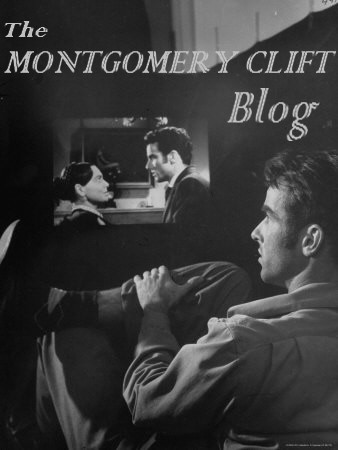


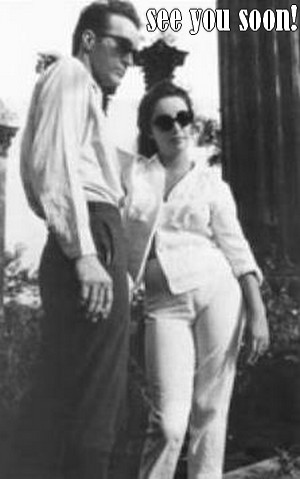
 Esta foto es relativamente conocida. Desconozco la fecha y el momento en que fue tomada, a primera vista parece que pertenece a la época de From here to eternity por la camisa que luce Monty y estar posando al lado de unas plantas pero yo lo veo muy joven para esa época. La situaría en A place in the sun, donde también luce camkisisas similares.
=============================
Libby Holman, the SLCT and the Treetops Legacy
By Harry Day, Vice-President of the SLCT
Libby Holman’s rise to stardom and the Reynolds scandal
Libby Holman, born in 1904, first attracted attention in the 1920’s as a Broadway actress with a sultry voice and voluptuous figure. She achieved stardom appearing with Clifton Webb in “The Little Show” in 1929 in which she sang “Moanin’ Low”, and “Three’s a Crowd” in 1930 in which she introduced “Body and Soul”. “Moanin’ Low” became a blues classic and her signature song, and would be performed often by Carly Simon decades later. Holman was credited with inventing the strapless dress, which helped her accentuate her smoky and sexually charged torch songs.
Holman’s personal life was constantly exotic if not chaotic. Her friends were often gay men, generally much younger than herself, foremost among them being Montgomery Clift. She would eventually have three husbands, but also maintained long-term and well publicized relationships with DuPont heiress Louisa d’Andelot Carpenter Jenny beginning in 1929, and with openly lesbian writer Jane Bowles starting in the 1940’s.
In 1931 at age 28, Libby Holman married tobacco heir Zachary Smith Reynolds who was just 20. Reynolds had been star-struck and had pursued her relentlessly. Even as Libby became pregnant, the marriage quickly deteriorated as Holman’s theatrical and flamboyant friends clashed with the conservative Reynolds and his family.
The events surrounding Reynolds’ death received enormous publicity and became the basis of David O. Selznick’s 1935 movie “Reckless”, starring Jean Harlow.
Following the Reynolds scandal, Holman and Christopher lived with Louisa for the remainder of the 1930’s. Libby returned to Broadway in 1934 performing in “Revenge with Music” (singing “You and the Night and Music”) and she became a fixture in New York nightclubs. She was offered but turned down the lead in Cole Porter’s “Anything Goes”, leaving the role to an unknown secretary named Ethel Merman. Holman could not escape the cloud of the Reynolds scandal and was often welcomed with hisses and boos, though many felt that the scandal actually enhanced her career.
Treetops and Holman’s later years
It was during the 1930s that Holman purchased 55 acres straddling the Stamford-Greenwich border on the Mianus River. The neo-Georgian mansion was completed in 1938, creating the estate known as “Treetops”. In love with the natural beauty of the area, Holman subsequently purchased adjacent parcels as they became available, eventually expanding the estate to 110 acres. Over the years she planted daffodils by the tens of thousands, creating new varieties that became a spectacle of color each year in April.
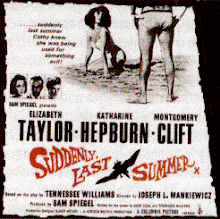
Holman entertained lavishly at Treetops in the 1940s and 1950s. Guests included her long-time friend Montgomery Clift, Truman Capote, Tallulah Bankhead, Imogene Coca, Martha Raye, Roddy McDowell, Tennessee Williams, Elizabeth Taylor and Michael Todd (who proposed marriage to Taylor in the mansion’s elegant private library).
Tragedy continued to befall Holman when her second husband, actor Ralph Holmes, committed suicide after returning from service in World War II. This earned Holman the label “Death Angel” among some who found morbid interest in the circumstance that two significantly younger husbands had both died at very young ages. At the time of Holmes’ death, Libby apparently had already begun a long-lasting relationship with Jane Bowles, wife of openly gay author Paul Bowles. It was during this time that Holman created a stir by appearing and touring with famed black guitarist and blues singer Josh White. In 1947, she starred with White in the movie “Dreams that Money Can Buy”.
The most devastating tragedy for Libby Holman was the death in 1950 of her beloved son Christopher, at age 17, from a mountain climbing accident. To honor him she started the Christopher Reynolds Foundation, dedicated to the cause of racial justice and equality. She appeared on Broadway for the last time in 1954 at the age of 50 in a one-woman show entitled “Blues, Ballads and Sin-Songs”. Most of her later appearances were benefits for civil rights and United Nations causes.
In 1959, through the Foundation, she sponsored a trip to India by Dr. Martin Luther King and his wife Coretta Scott King so that they could meet and study with Mahatma Gandhi. She became personally close with the Kings and entertained them at Treetops.
For many years, Holman did volunteer work one day a week at Stamford Hospital, and would occasionally be spotted in Stamford or Greenwich being chauffered in her Rolls-Royce. One week every year, she opened Treetops to the public for a Daffodil Festival, the proceeds of which benefited local charities including the Visiting Nurses Association and the Stamford Girls Club. The Daffodil Festival became an annual tradition that continued until recent years.
Holman became progressively more depressed and reclusive and her third marriage—to artist and sculptor Louis Schanker in 1959—was stormy. Schanker, reportedly extremely jealous of Libby’s continuing relationship with Jane Bowles and resentful of her gay friends of both sexes, banned them from Treetops. Schanker spent a great deal of his time in a studio that Holman constructed for him on the grounds of Treetops.
Holman rarely entertained at Treetops after her marriage to Schanker. Jane Bowles’ debilitating stroke, the assassination of Martin Luther King, and the death of her mother and that of Montgomery Clift all had a profound effect on Holman, leading her further into isolation and alcoholism. On June 18, 1971, at 67, she was found in the garage at Treetops, slumped over in her Rolls-Royce, and was declared dead after being rushed to the Stamford Hospital. The coroner found she was legally drunk, and ruled the death a suicide. According to Paul Bowles, few of her friends ever accepted the coroner’s finding, maintaining that she would have been too weak to close the garage door by herself and citing the fact that the car’s ignition had been turned off. Coretta Scott King was among the illustrious group that gathered for Holman’s memorial service.
The fate of Treetops
As a committed conservationist, and determined to save Treetops from development, Libby Holman had bequeathed it to Boston University for a fine arts center and parkland. However, the University determined that it could not operate and maintain the property, and returned it to the estate in 1976.
In 1978, in a move to fulfill Libby Holman’s wishes, the mansion and the 40 acres located in Stamford were offered as an outright gift to the City as a cultural center and parkland. Despite the support of then Republican Mayor Louis Clapes and overwhelming public support for accepting the generous offer, the Stamford Board of Finance failed to approve a proposal that would have set aside $58,000 annually to maintain the property. The gift was rejected. Republican Leonard Vignola, a purported conservationist, cast the deciding vote, asserting that the City did not have the resources to care for the property.
The City’s lost opportunity became painfully evident when, within two years, the mansion and the 40 acres in Stamford were sold to Stamford-based Champion International Corp. for $2 million. The company purchased the 70 acres in Greenwich for $2.5 million. Champion operated Treetops as a corporate guest and conference center and won high marks for corporate citizenship by caring for the property, allowing access via trails from the adjacent Mianus River Park, and continuing the annual Daffodil Festival.
The final battle to save Treetops
In the spring of 1997, Champion announced its intention to sell Treetops, kicking off a four-year battle to save the property from development. No price was announced. A group including SLCT President Percy Lee Langstaff, Peter Moss of the Mianus River Greenway Alliance, and several other open space advocates met with Cummings and Lockwood Attorney Ralph Nichols (who had represented the Libby Holman estate) to discuss the prospect of raising enough money to buy Treetops and preserve it, or persuading Champion to donate at least part of the land or accept a reduced price for it if it could be preserved.
A bipartisan array of political leaders took notice, among them Democrats Mayor Dan Malloy and State House Majority Leader Moira Lyons of Stamford, and Republicans State Senator William Nickerson of Greenwich, Congressman Chris Shays and Greenwich First Selectman Tom Ragland.
The effort seemed to be dealt a setback when, in early 1998, Champion announced it had signed a contract to sell the property to New Canaan-based Toombs Development Co. for the construction of 55 luxury homes projected to cost $4 million each. But the awareness created by Percy Lee Langstaff and others would soon prove beneficial. In March of 1999, after negotiating for a year with authorities in Greenwich and Stamford, the Greenwich Planning and Zoning Commission rejected the plan for building 30 homes on the 70 acres in Greenwich. Environmental reasons relating to wetlands, glacial boulders, and possible impact on the Mianus River were cited. The Toombs plan did not go forward.
Public consciousness and concern over the future of Treetops was acute when it became known in September 2000 that International Paper (which had acquired Champion International) had signed a letter of intent to sell the property to New York developer Brickman Associates for $15 million. Behind the scenes, however, the communities of Stamford and Greenwich and the State of Connecticut, together with the Trust for Public Land (a national facilitator for saving open space), had made clear that they would present a credible offer for the property if given the chance.
On October 17, International Paper and the Trust for Public Land announced an agreement that would make possible the protection of 105 acres of the Treetops property, excluding the mansion and its immediate grounds, for a total purchase price of $11.5 million. In order to buy 100 days, TPL had already stepped forward with a deposit of $500,000 which would be refunded if the deal could be closed but forfeited if not. The State of Connecticut DEP had already agreed to contribute $3.5 million, but the deal was contingent on raising $8 million additional funds by January 31, 2000. Otherwise, IP would consummate its letter of intent with Brickman.
The proposed transaction called for the City of Stamford to purchase a conservation easement for $1.5 million on the 35 acres in Stamford, and for the Town of Greenwich to come up with $3.5 million for a similar easement on the 70 acres in Greenwich. The remaining $3 million would have to be raised entirely from private sources—within 100 days.
The agreement was made possible by the collaboration of Governor John Rowland and the Connecticut DEP, the Trust for Public Land, International Paper, Mayor Malloy and key members of the Stamford Board of Representatives, Greenwich First Selectman Lolly Prince, Congressman Shays, Majority Leader Lyons, State Senator Nickerson, Senate Majority Leader George Jepsen from Stamford and State Rep. Dolly Powers of Greenwich.
The Town of Greenwich then determined that it would contribute $1.5 million of municipal funds rather than $3.5 million, and rely upon the Greenwich Land Trust to make up the difference. Saving Treetops thus rested on the ability of the Stamford Land Conservation Trust and the Greenwich Land Trust to raise $5 million in 100 days.
The Treetops legacy is saved
The New York Times, in an article entitled “Fund-Raisers Rush to Save Treetops—Seventy Five Days and Counting”, printed Sunday, January 7, 2001, captured the heroic and frenzied efforts of Percy Lee Langstaff and the SLCT:
“I’m receiving checks for $25 to $2,000 daily from ordinary citizens who care,” said Percy Lee Langstaff, President of the Stamford Land Conservation Trust. “And that’s terribly exciting that people care. We’re working like crazy.” ….
Greenwich Land Trust Vice President David Ogilvy was quoted as being “blown away” by the willingness of his members and the community to support the effort.
Thousands of citizens responded in an unprecedented show of public support for open space conservation, and the two organizations together raised the required $5 million before the deadline. The Trust for Public Land purchased 94 acres from International Paper and then transferred it to the Connecticut Department of Environmental Protection. Conservation easements were granted to the municipalities of Stamford and Greenwich, the Stamford Land Conservation Trust and the Greenwich Land Trust, and the Connecticut-American Water Company. International Paper retained ownership of the Treetops mansion and approximately 17 acres of adjoining land, with 11 acres covered by conservation easements.
The mansion was later sold by International Paper to SLCT friends Don and Lisa Brownstein, who have carefully restored many of the rooms to their original elegance. Through the generosity of the Brownsteins, Louis Schanker’s studio became the home in 2006 of the Treetops Chamber Music Society’s annual concert series. In addition, and fittingly enough, the studio was the site in 2006 of a tribute to Percy Lee Langstaff, honoring her for her thirty years’ service as President of the SLCT.
More than seven decades have passed since Libby Holman first set foot on the grounds of her treasured Treetops, and 38 years since she died. Thankfully, her passionate desire to have her property preserved was fulfilled through the determined and tireless efforts of the SLCT and all the other community organizations, leaders and donors who answered the call. The land remains pristine, and the trails a joy to hike. Treetops, its rich legacy intact, survives for future generations.
 Revista de cine que en su número de diciembre de 1950 dedicaba la portada a la simpática June Allyson y en su interior ofrecía un reportaje sobre A place in the sun (Un lugar en el sol, 1951), titulado "Échale un vistazo" con 16 fotos en blanco y negro. Aunque no tengo el reportaje cabe suponer que hablaría del rodaje y probablemente cotillearía sobre la pareja formada por Liz Monty. La película aún se estaba rodando y no se estrenaría hasta el 28 de agosto de 1951.
 Con su madre, Sunny Clift en la estación invernal de Saint Moritz


 Dos ejemplares distintos de programas de la obra de teatro The skin of our teeths (La piel de nuestros dientes), obra de Thornton Wilder estrenada en 1942.
"Si uno no está
trastornado, los problemas se pueden solucionar fácilmente en un día, pero la
vida es demasiado complicada, particularmente si eres actor. No puedes vivir tu
vida con moderación o nunca aprenderás nada acerca de ti mismo o de la otra
gente. Pase lo que pase, te tienes que forzar para ser capaz de estar
profundamente comprometido y abierto a lo que pueda surgir, para ser siempre
inocente."
"Lo que hace la
grandeza de un actor es lo mismo que hace la grandeza de una persona, el sentido
del humor".

 Una excepcional instantánea del rodaje de From here to eternity (De aquí a la eternidad, 1953). Se acababa de rodar una escena, probablemnte la de cavando la fosa y a Monty lo auxilian para secarle el sudor. Son muchas las películas de Montgomery Clift que sin estar catalogadas como de acción o aventuras, se caracterizan por el enorme despliegue de fuerza física. Aquí las escenas de entrenamiento militar, las peleas y el enfrentamiento con el personaje de Ernest Borgnine, lo convierten en un rodaje muy sacrificado. Así que es normal que Monty sudara mucho y lo tuvieran que refresca como s eve en la foto. Esta pelícual es también en la que el físico de Monty más sobresale.
 Reno was enjoying the last of its glory days as Nevada's premier divorce and gambling city, and received a huge publicity boost, when Academy-Award winning director John Huston and producer Frank Taylor came to town in 1960 to shoot "The Misfits". American dramatist and Pulitzer Prize winner Arthur Miller wrote the screenplay for his seductive wife, actress Marilyn Monroe.
On June 11, 1956, Miller was divorced in Reno from his first wife after spending his six-week residency in Sutcliffe at the Pyramid Lake Guest Ranch. He married Marilyn Monroe some three weeks later. His encountering "misfit" cowboys and the round up of wild horses inspired a short story in Esquire (October 1957) and later the screenplay that captured the end of an era in the American West. Among the actors and actresses featured in the poignant drama were Marilyn Monroe, Clark Gable, Montgomery Clift, Eli Wallach, Thelma Ritter, and Kevin McCarthy. Wallach and McCarthy are still alive. Playwright Arthur Miller died February 10, 2005.
"At one time, 'The Misfits' held the title of the most expensive black-and-white film ever made," a recent letter to the editor of the Reno Gazette-Journal claimed, "and, sadly, it was the last film for Monroe, Gable and Clift." While it appears many people subscribe to the tragic notion that the careers of three Hollywood film stars ended with this haunting movie, the truth is more complicated.
It is true that Clark Gable died of a heart attack on November 16, 1960, at age 59, just twelve days after shooting the final scenes in Los Angeles. A month earlier, east of Dayton, at "Misfit Flats,"Gable had shot the stallion fight sequence with Gay Langland, Gable's character, being dragged around by the powerful horse. Many believed that this taxing scene took its toll on Gable's health. Expecting to give birth soon, Gable's fifth wife, Kay, was unable to attend a preview of "The Misfits" in Hollywood on January 10, 1961. The "World Premiere" in Reno occurred on January 31 at the Granada Theater.
Marilyn Monroe, after her divorce from Arthur Miller on January 20, 1961, actually started filming another movie in 1962, "Something's Got to Give." Monroe's deteriorating condition, fueled by drugs and personal turmoil, reached a point that she was dropped from the film after many times forgetting her lines and missing numerous shoots.
Meanwhile, every indication is that Twentieth-Century Fox simply did not have the picture ready for filming. Monroe spent much time shooting scenes that had already been shot because the next scenes were not yet written. The studio was in serious financial condition and was looking desperately for ways to cut costs. Monroe’s fees for the film was one of the highest of any film then in production.
Her untimely end came on August 5. The Los Angeles County Coroner ruled the thirty-six-year-old woman's death a suicide, albeit under mysterious circumstances. The scenes from "Something's Got to Give" were used in "Marilyn" (1963), a documentary narrated by Rock Hudson.
Montgomery Clift's film career did not end with "The Misfits." Later in the year after the "The Misfits" was released in 1961, Clift also starred in "Judgment at Nuremberg." The following year he played the renowned Austrian psychiatrist Sigmund Freud in Director John Huston's "Freud". In 1965, he was featured in "The Love Goddesses." His last film was a French production released in 1966 entitled "The Defector." Clift's dependency on drugs and alcohol, and also his lifelong bisexuality, profoundly effected him during his career. His life was cut short on July 23, 1966 when his companion Lorenzo James, found him dead lying nude on top of his bed in New York City. According to the autopsy, the cause of death was "occlusive coronary artery disease".
Some critics argue "The Misfits" may have been Monroe's best performance. In playing the vulnerable divorcee Roslyn Taber, navigating between the affection of three men, she really played herself. The rest of the cast including Gable and Clift gave solid performances. However, the movie did not receive wide critical acclaim nor was it a box-office hit. Its popularity has grown with time. There is a melancholy tone to this engaging black-and-white movie that suggests the tragedy that was to consume Gable, Monroe, and Clift.
Photo: Marilyn Monroe as Roslyn Taber and Kevin McCarthy as Raymond Taber on the steps of the Washoe County Courthouse, July 22, 1960 Courtesy of Kevin McCarthy
(Original version in Sierra Sage, Carson City/Carson Valley, Nevada, January 2001 edition)
Sutil, atractivo, atormentado... Muchos son los adjetivos que le cuadran a | |||||||||||||||||
|
Con ocho años tuvo que superar una operación que le dejó una cicatriz en el cuello. Sus padres buscaron siempre educarles dándole todo lo que estaba al alcance de su mano, incluso en los momentos económicamente más difíciles para la familia. Desde los catorce años empezó a actuar. Su primer papel fue en el teatro Berkshire de Stockbridge (Massachussets), en la obra Fly Away Home. De allí pasó a Broadway en donde estaría un año con Jubilee, un musical de Cole Porter en el que hacía de príncipe. Después llegarían varias obras más como Obedient Husband, Eye on the Sparrow y así hasta que su papel en Dame Nature será muy destacado por la crítica. Tras conocer al compositor Lehman Engel durante un viaje por México contrae la disentería, lo que supondrá un paréntesis en su carrera, de la que permanecerá apartado durante unos meses.
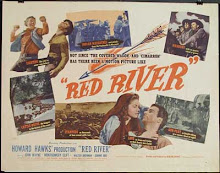
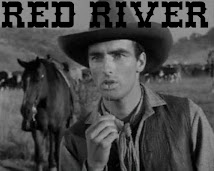
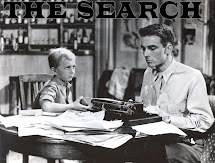
Sus actuaciones no pasan inadvertidas para uno de los fundadores del Actor’s Studio, el siempre controvertido Elia Kazan. En 1948 rueda Angeles perdidos, con Fred Zinnemann y, en especial, Río Rojo, de la mano de Howard Hawks y con un enorme John Wayne como protagonista. Había duda de que aquel muchacho pudiera aguantar la demoledora personalidad de Wayne, pero el propio John acabó reconociendo la calidad de Clift y confirmando las esperanzas que en él había depositado Hawks. A continuación interpreta importantes películas como Un lugar en el sol (1951), de George Stevens, Yo confieso (1953), con el excelente Alfred Hitchcock, y Estación Término (1953), de Vittorio de Sica.
Cuando retorna es un hombre transformado: la calidad de sus interpretaciones y, sobre todo, de la selección de títulos se resiente bastante. Cabe citar su colaboración con Elia Kazan, otra vez, en Río salvaje (1960); o sus papeles en ¿Vencedores o vencidos? (1961), de Stanley Kramer. El mismo año rueda la enfática y crepuscular Vidas rebeldes, con John Huston. Su última intervención fue en una discreta película, El desertor (1966), de Raoul J. Levy, después de haber estado otros cuatro años parado por motivos de salud.
Comprendió, de la mano de gente como Elia Kazan, que la interpretación en cine debía evolucionar, que el estudio y la intuición necesitaban ir acompañadas de una profundización en las características psicológicas del personaje para extraer nuevos matices al arte dramático. Conectó ampliamente con la generación de los años cincuenta, que veía en él una especie de arquetipo, alguien que pretendía romper los moldes que saltarían por los aires dos décadas después. En cierto modo, se puede decir de él que se anticipó a su tiempo, con las dificultades que eso conlleva. Su vida se vio bastante afectada por sus inclinaciones homosexuales, tendencias que su hermano aceptó -no así su madre- en unos tiempos en que la libertad sexual no existía. De hecho, los estudios le impusieron la compañía femenina en numerosas ocasiones (la propia Elizabeth Taylor fue una de ellas). Filmografía 1948: Los ángeles perdidos; Río rojo.
Copyright © Revista Cine y Letras, Guzmán Urrero Peña, Madrid, 2010. | |||||||||||||||||
| |||||||||||||||||
| |||||||||||||||||






 Entradas
Comentarios


 Entradas
Comentarios








 lift nació el 17 de octubre de 1920 en Omaha, Nebraska, y perdió la vida
 l teatro lo sería todo para él. A lo largo de los años, interpretaría obras de Thornton Wilder, Lillian Hellman, Tennessee Williams y Anton Chejov entre otros, hasta que a finales de los años cuarenta comienza a intervenir en sus primeras películas.
 oy día tiende a recordársele como uno de los grandes actores intelectuales de Hollywood. Montgomery Clift tuvo una carrera importante, pero no llegó a dar de sí todo lo que llevaba dentro. Su compleja personalidad, su fragilidad anímica y su inadaptación a la época que le tocó vivir, su retraimiento en los actos sociales, unido a cierta mala suerte y una salud más bien frágil, entorpecieron su carrera siempre.


