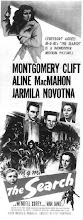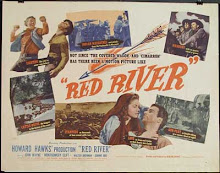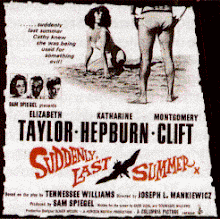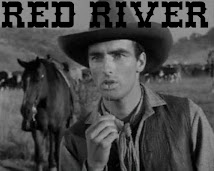

Monty fue a Nassau
página 187

8.3.08

7.3.08
La adolescencia de Monty.- fotos (1)


En 1933 (Monty tenía 13 años)

Monty y su hermana gemela, Ethel, en Fort Lauderdale (Florida), en 1933. Monty tiene 13 años y ya ha interpretado As husband go.
6.3.08
La escena de lucha de The Young Lions
La película se rodó en parte en París y se concluyó en Hollywood. Allí se rodó la gran escena de lucha del personaje de Montgomery Clift, el soldado judío Noah Ackerman. Como hacía con todos sus personajes, se preparó a fondo físicamente, en esto Monty se asemejaba a las ideas del método (Actor's Studio) . Pero sin duda era su profesionalidad y sobre todo la gran capacidad que tenía para diseccionar a los personajes lo que le hacía meterse de lleno en la piel de los mismos. Como él mismo comentaba, eso hacía que trabajara el doble que otros actores pero tardara más en ser percibido por el público.
La preparación que realizó Monty para esta lucha fue muy intensa y se atuvo a un estricto entrenamiento previo con Johnny Indrisano, antiguo campeón que tenía su carrera en el cine (ver ficha en Imdb). Se negó a utilizar un doble y filmar la pelea duró hasta 4 días.
Buscando fotos de Indrisano con Montgomery Clift he encontrado esta en una web donde se discute si es él o no. Ver post.
Acabó completamente agotado y comenzó a sufrir calambres en la pierna. Un doctor le diagnosticó flebitis y le recomendó usar una venda elástica. Según la biografía de Patricia Bosworth, Monty le preguntó su podía seguir jugando al tenis. Es un dato revelador constatar que aún jugaba al tenis (deporte que le encantaba desde que lo descubrió en Hollywood comoexpliqué en este post) teniendo en cuenta que estamos en el otoño de 1957 y que Monty cumpliría, en pleno rodaje precisamente, 37 años y que su espalda está muy resentida por el accidente de coche. No obstante, el doctor le dijo que sí y le recetó Benadryl para los calambres. Al preguntarle si había algo más que le molestase, Monty le confió que por las mañanas solía vomitar pero que lo atribuía a un exceso de alcohol y tabaco. Otra cuestión reveladora, yo no creo que Monty hablara de sus hábitos con el apelativo de exceso, más bien querría estar despejado por la mañana temprano para estar listo para el rodaje. El doctor le recetó Miltown y belladona para su nariz tapada. No sabemos si era algo relativo al sistema respiratorio o más bien a una desviación del tabique nasal como consecuencia de estrellarse la cara contra el volante.
Poco después, estando en el departamento de maquillaje de la Fox, abrió su bolsa de píldoras. Un miembro del reparto fue testigo de aquello:
"Nunca había visto a nadie que llevase tantas drogas. Y sin embargo, sobrevivió, creó y fue extraordinario."
5.3.08


3.3.08
From Here To Eternity Tribute
Abba y la película tienen algo en común, aunque no lo parezca: Happy Hawaii.
Como dice su autor, kks58:
If you love the movie 'From Here To Eternity' just as much as I do, you definitely must see my tribute.
If you love the movie 'From Here To Eternity' just as much as I do, you definitely must see my tribute.

1.3.08
Foto del mes (5)
 En el rodaje de RAINTREE COUNTY
Es una foto relativamente conocida pero desde luego es muy espontánea. En ella se ve a Monty gesticulando, llevándose las manos a la cabeza donde lleva una hoja de laurel (el trofeo que recibe el protagonista tras una carrera, en los primeros minutos del filme). Lleva gafas y el guión queda recogido a los pies. En uno de los dedos, un sempiterno cigarrillo.
28.2.08
Presupuestos de sus películas
Esta web, recoge algunos presupuestos de películas suyas:
* Red River (1948) ---------------- $ 3M
* The Heiress (1949) --------------- $2.6M
* A place in the sun (1951) --------- $2.3M
* From here to eternity (1953) ----- $1.65M
* Raintree County (1957) ---------- $5M
* Suddenly, last summer (1959) ---- $3M
* The Misfits (1961) ---------------- $4M
* Judgment at Nuremberg (1961) -- $3M
* Freud (1962) -------------------- $4M
Destaca el presupuesto tan abultado de Raintree County y el más pequeño es el de Fron here to eternity.
27.2.08
Hebdo Roman.- 27 feb 1957
Portada de la revista francesa dedicada a The Heiress (La heredera, 1949). Llama la atención que se hable de ella en una fecha tan tardía como el 27 de febrero de 1957, tal día como hoy (hace 51 años).
 Hebdo Roman.- L'héritière - 2ème année - N°24 - 27 février 1957 revista francesa
26.2.08
Funeral por William Brooks Clift, el padre de Mntgomery Clift
El padre de Montgomery Clift murió el lunes 24 de febrero de 1964 a los 77 años de un ataque al corazón en el New York Hospital. En aquella época vivía junto a Sunny en Nueva York.
En el periódico New York Times se recogía la noticia del funeral. Se daban datos acerca de su profesión como agente de bolsa, citando las distintas firmas para las que había trabajado, de hecho a su muerte estaba registrado en una de ellas. También datos biográficos de dónde había nacido y en qué universidad había estudiado. No me detengo en estos datos porque ya hablé de ellos en el post de su biografía. Lo interesante es conocer la dirección que tenía en Nueva York (460 East 79th Street) y los que le sobrevivieron, aparte de su familia: su hermano Rhotan y su hermana la señora Florence Horton (siendo él de los más pequeños y de los muchos hermanos que eran, sólo 2 le sobrevivió). Y el periódico habla de 9 nietos. Sabiendo que Ethel tuvo 5, por aquella época yo creo que Brooks tenía 4 y todavía no había nacido el primero que tuvo con Eleanor. De ser así habría 12 sobrinos. Según otras fuentes serían 13. No hay datos claros al respecto.
Ésta es la noticia original que se recogía en el periódico:
William B. Clift, 78 (*), Investment broker
February 26, 1964, Wednesday
Page 32, 164 words
William B Clift, a Wall Street investment broker and the father of Montgomery Clift, the actor, died of a heart attack Monday in New York Hospital at the age of 78. He lived at 460 East 79th Street. At his death Mr Clift was a registered representative of Jesup & Lamont, 26 Broadway, members of the New York Stock Exchange. He was born in Chattanooga and was a graduate of Cornell University. In New York he was a partner in the New York Stock Exchange firm of Ames, Emmerich & Co., was associated with the exchange firm of Tucker, Anthony & R.L. Day and, from 1956 to 1962, was a partner in the exchange firm of Theodore Tsolainos & Co. Surviving besides his son Montgomery, are his widow, Mrs. Ethel Fogg Clift; another son, William Jr.; a daughter, Mrs. Robert C. McGinnis; a brother, Rhotan; a sister, Mrs. Florence Horton, and nine grandchildren."
En la web, ni siquiera ofrecen un primer párrafo, todo el artículo es de pago. He dado con él porque lo recogió Will Johnson.
(*) Murió con 77 años lo que pasa es que calcularon la edad de año a año sin contar los meses de nacimiento y fallecimiento.
En la web, ni siquiera ofrecen un primer párrafo, todo el artículo es de pago. He dado con él porque lo recogió Will Johnson.
(*) Murió con 77 años lo que pasa es que calcularon la edad de año a año sin contar los meses de nacimiento y fallecimiento.
25.2.08
A place in the sun.- programa de mano


En los cines españoles era muy frecuente en los años 50 repartir unos programas de mano como éste. Por delante el cartel de la película y por detrás la publicidad del cine donde se proyectaba.
24.2.08
23.2.08
Old Monty (1)
Iniciamos una nueva sección de imágenes. Es el Monty post-accidente o el de los últimos años. Su rostro no sólo está prematuramemte envejecido sino que sus miradas, sus expresiones desprenden una inmensa tristeza y aflicción.
Siempre me ha llamado la atención la cantidad de fotos de estudio que le hicieron desde 1956, incluso seguían publicándose cromos y postales de él. En el fondo, no debería de extrañarme pues el público seguía de su lado. Siempre estaremos con Monty, no nos quedamos con el Monty guapo y joven, toda su figura y toda su vida es de especial interés.
Esta es muy conocida y representa lo que comento. Aparece casi huraño, muy retraído. La segunda foto, es menos conocida, pero se ve más nítida y una parte del traje.


22.2.08
Artículo de la Glbtq
* glbtq: An Encyclopedia of Gay, Lesbian, Bisexual, Transgender, and Queer Culture
Brooding and intense, Montgomery Clift was one of a group of young actors in the 1950s who personified the emotionally repressed loss of innocence of the post-World War II generation. A dedicated actor who exhausted himself both emotionally and physically with the depth of his characterizations, Clift was also an isolated and tortured, closeted gay man who used drugs and alcohol to escape his pain.
Although he was both friend and inspiration to the likes of Marlon Brando and James Dean, Clift felt his own acting achievements were undervalued, and he died as bitter and broken as the characters he played in many of his films.
Clift was born into privilege in Omaha, Nebraska on October 17, 1920, the son of a wealthy stockbroker. His father spent most of his time working in New York, leaving Clift, his twin sister Roberta, and his older brother Brooks in the care of their high-strung mother.
An upper-class childhood filled with lengthy trips to Europe and the Bahamas ended suddenly with the stock market crash of 1929, and the family moved to a small house in Sarasota, Florida. There Clift discovered the theater in a local teen acting club.
Clift's mother encouraged her son's acting ambitions, and when the family moved back to New York in 1935, he auditioned and was cast in a Broadway production, Fly Away Home. His 1938 performance in the lead in Dame Nature established Clift's acting career. He was seventeen years old.
Clift's success on Broadway continued, and he soon found himself courted by Hollywood film executives. He rejected a number of scripts before finally making a memorable film debut in Howard Hawks' 1948 film Red River. He followed that with a critical success in Fred Zinneman's The Search (1948), which earned him the first of four academy award nominations.
Clift continued to make successful films and developed friendships in Hollywood, the closest of which was with actress Elizabeth Taylor. Taylor and Clift were both passionate and vulnerable people who felt a bond immediately. They worked together on several films, beginning with George Stevens' A Place in the Sun in 1951, and remained friends until the end of his life.
Clift had always had relationships with men, but he dated Taylor and other women to conceal his homosexuality. In the early 1950s, he turned down a role in Alfred Hitchcock's Rope, based on the infamous Leopold and Loeb gay murder case, probably because it might have led to speculation about Clift's own life.
Though at the beginning of his career, he drank only moderately and conducted his private life discreetly, by the mid 1950s he was using alcohol and drugs excessively and spending wild nights cruising.
In 1954, Clift rented a house in the gay resort of Ogunquit, Maine, and spent the summer picking up men on the beach for S&M parties. The studios did their best to keep Clift's exploits out of the press, but rumors about his lifestyle abounded.
On May 12, 1956, after leaving a party at Taylor's, Clift drove his car into a telephone pole. The crash caused scarring and partial paralysis of his face, which would affect his appearance for the rest of his life. Although he continued to act, and gave some of his most memorable performances after the accident (in, for example, Stanley Kramer's Judgment at Nuremberg and John Huston's The Misfits in 1961), both his expressive acting and his personal life were never the same.
In his final years, Clift plunged more deeply into drug and alcohol abuse and wild sexual behavior. He began to be considered unreliable by studio bosses. Sadly, by the time his companion Lorenzo James found him dead of a heart attack at their home, on July 23, 1966, he was virtually unemployable.
Tina Gianoulis
21.2.08
A place in the sun.- release dialogues script (21 feb 1951)
Este documento no es el guión propiamente de A place in the sun (Un lugar en el sol 1951) sino una publicación sobre los diálogos que se distribuyen para su estreno.
Ésta es la portada del documento original donde se ve escrito a máquina el título y los datos del documento y el sello de la Paramount.
Ésta es la portada del documento original donde se ve escrito a máquina el título y los datos del documento y el sello de la Paramount.
 (pulsa en la imagen para ampliar /enlarge)
(Englist text)
Paramount, 1951 Release Dialogue Script for the 1951 film noir, "A Place in the Sun," directed by George Stevens, based on the 1925 novel by Theodore Dreiser, starring Montgomery Clift, Elizabeth Taylor, Shelley Winters, and Raymond Burr. Title page dated February 21, 1951, noting 13 reels, and with a purple stamp reading, "PARAMOUNT FILM LIBRARY" at the top right corner. The film title and a reference number of 10054 are noted in black holograph marker along the spine. Bound at the side with two heavy staples, as was the practice at Paramount during this period. Title page is worn at the left edge, and rather than incurring further wear, has been placed in a separate plastic sleeve. In a custom quarter-leather clamshell box.
20.2.08
A place in the sun.- Doctor Macro's High Quality Movie Scans
(English text)
| A PLACE IN THE SUN |
|



| |
| Paramount, 1951. Directed by George Stevens. Camera: William Mellor. With Montgomery Clift, Elizabeth Taylor, Shelley Winters, Anne Revere, Keefe Brasselle, Fred Clark, Raymond Burr, Ted de Corsia. |
After hitchhiking from Chicago, young George Eastman arrives at the Eastman bathing suit factory and arranges to visit his uncle Charles, the company's president, at his home that evening. Charles, a tycoon who recently met his nephew for the first time, introduces George to his wife Louise, daughter Marsha and son Earl. The Eastmans gingerly question George about his widowed mother Hannah, a religious mission worker in Chicago, and George, keenly aware of his lowly social position, responds with vague politeness. After Charles insists that Earl, who has a management position at the factory, find a job for his cousin, debutante Angela Vickers enters the room, mesmerizing George with her beauty. The next day at the factory, the condescending Earl assigns George to the assembly area, where the bathing suits are put into boxes, and advises him about the strict rules against dating fellow employees. George works tirelessly and at night in his modest apartment, and composes a list of suggestions for improving productivity on the assembly benches. Yearning to succeed, George drives to the Eastmans' during one of their lavish parties and sees Angela arriving, but cannot bring himself to go inside. Instead, he goes to a movie and ends up sitting next to co-worker Alice Tripp. After the movie, George and Alice walk together, and she comments that George will always be different because he is an Eastman. The uneducated George maintains that he is not special and becomes momentarily lost in thought when he notices a boy singing in a sidewalk mission group. George then asks Alice about her life, and she reveals that she came from a poor family and, ironically, never learned how to swim. Outside Alice's furnished room, George and Alice kiss and agree to see each other again. Later, at the end of another date, the couple wind up in Alice's room and spend the night together. The next morning at the factory, Charles comes through the assembly area and, seeing George, offers to promote him and invites him to another party. When Alice learns that the party coincides with George's birthday, she reminds him that she had already planned a party for him and insists that he leave the Eastmans' early. At the Eastmans', George feels out of place and seeks refuge in the deserted billiard room. While playing pool by himself, George is noticed by Angela, and the two strike up a friendly conversation. Just then, Charles bursts in and insists that George call his mother about his promotion. Though embarrassed, George complies, while Angela hangs on his arm, teasing him. George and Angela spend a few romantic hours dancing and, when George finally shows up at Alice's, she is angry and informs him that she is pregnant. Though stunned, George reassures her, but later accepts Angela's invitation to a party at her parents' house. There, George and Angela confess their love, and George frets that Angela will be leaving soon to spend the summer at her parents' lakeside home. After Angela assures him that they can still see each other, they kiss with deep passion. Later, Alice goes to see Dr. Wyeland about her pregnancy, but he insists that he will help her only if she intends to have the baby. Although Alice tells George that he must now marry her, George protests and asks for time. Alice agrees to wait until the first week in September, when George will be taking his vacation. Sometime later, Angela drops by George's apartment to tell him that her parents have invited him to visit at the lake during his vacation. George calls Alice and begs for another week, stating that he will be with his uncle at the lake and might get a bonus. Reluctantly Alice complies, and George begins a carefree holiday with Angela. At secluded Loon Lake, Angela brings up the subject of marriage and piques George's interest when she tells him about a couple who drowned there the summer before. Alice, meanwhile, waits for mail from George, but instead sees a newspaper photograph of him with Angela. Back at the lake, during a Hawaiian-themed dinner, George receives a phone call from Alice, demanding that he come for her at the bus station. George lies to Angela that his mother is ill and, at the station, Alice threatens to expose George unless he marries her immediately. George gives in; the next day, he and Alice go to the county courthouse to wed, but discover that it is closed because it is Labor Day. Seeing an opportunity, George suggests that they picnic at Loon Lake and spend the night at the lodge. Before reaching the lodge, George then pretends to have run out of gas and rents a boat under an assumed name. George rows Alice to the far side of the lake and, after night falls, listens with growing agitation as she chatters about how happy they are going to be. Sensing George's displeasure, Alice abruptly asks him if he wished she were dead, and George fights to maintain his composure. When Alice suddenly rises to come to him, causing the boat to sway, George tries to stop her, but the boat capsizes. George and Alice both go under, but only George makes it to the shore. Stumbling in the dark, George walks into a Boy Scout camp before locating his car and driving off. The next day, George returns to the Vickers', while at the courthouse District Attorney R. Frank Marlowe is notified about Alice's death. After questioning the boat keeper and the Boy Scout who saw George, Marlowe concludes that only Alice drowned. Detectives then interrogate Alice's landlady, who repeats gossip that Alice was involved with George. George, meanwhile, has a frank conversation about his background with Angela's father Anthony and impresses him with his honesty. Although Angela is unaware of the murder investigation, George senses the police will soon be closing in on him and asks Angela to believe in him, no matter what she may hear. After she swears her undying love, George says goodbye and is arrested by Marlowe. Determined to keep his daughter's name out of the trial, Anthony puts up the money for George's defense. Angela follows the proceedings while in school, but remains dazed by the desperate turn of events. During the trial, several witnesses implicate George, and Marlowe accuses George of bashing in Alice's head before throwing her overboard. On the stand, George admits that he had planned to kill Alice, but changed his mind before the boat accidentally capsized. Despite his candid testimony, George is convicted and sentenced to die. In prison, George is counseled by both his mother and a minister to look into his heart to determine whether he did everything he could to save Alice. Haunted by a vision of Angela, George confesses that he is unsure. Just before his execution, Angela visits George and quietly declares she still loves him. Accepting his fate, George then is led to his death. Notes The film is based on the novel An American Tragedy by Theodore Dreiser (New York, 1925) and the play of the same name by Patrick Kearney (New York, October 11, 1926). The working titles of this film were An American Tragedy and A Modern Story. According a July 1951 ParNews item, Paramount changed the title from An American Tragedy to A Place in the Sun because the latter was perceived as more "positive." Snippets from the hymns "Bear Ye One Another's Burdens" and "Rescue the Perishing" are heard in the film. Theodore Dreiser's novel was inspired by the real-life murder trial of Chester E. Gillette, who on July 11, 1906, was convicted of drowning his pregnant girlfriend, factory worker Grace Brown, in a lake in the Adirondacks. Contending that Gillette committed the crime in order to marry a rich girl, the state argued for the death penalty, and Gillette was electrocuted on March 20, 1908. A Place in the Sun marked director George Stevens' first film since his 1948 production I Remember Mama. According to a December 1949 LADN article, Stevens began adapting Dreiser's novel many years before the film's production and signed a deal with Paramount primarily because it owned the rights to the book. When he proposed the project to the studio, however, he met with great resistance, as Paramount had released a 1931 version of the novel and play, titled An American Tragedy, directed by Joseph von Sternberg and starring Phillips Holmes, Sylvia Sidney and Frances Dee, which was both a commercial and critical flop. Stevens eventually convinced the studio to undertake a second version, pointing out that the 1931 version was not a faithful adaptation of the novel and that Dreiser himself had condemned the earlier picture (Dreiser actually sued Paramount to prevent the film's release, but lost). According to an April 1950 NYT article, Dreiser "disowned" the 1931 film's main character, who he felt had been turned into a "'stupid and criminally inclined boy rather than a victim of environment.'" Modern sources claim that Stevens changed the name of the novel's protagonist from "Clyde Griffiths" to "George Eastman," combining his own first name with the first part of the Eastman-Kodak Company name. Although the script did not face major censorship problems, Joseph I. Breen, director of the PCA, did express reservations about the scene in the doctor's office. In a November 14, 1949 letter, contained in the file on the film in the MPAA/PCA Collection at the AMPAS Library, Breen cautioned against any direct reference to abortion and complained about a line in the script in which "Alice" says, "Doctor, you've got to help me." The line was changed to "Somebody's got to help me," and although Alice's desire for an abortion is implied, the scene does not contain any overt mention of the procedure. According to an October 1949 ParNews item, location shooting took place at Lake Tahoe, Echo Lake and Cascade Lake, in the Sierra Nevada Mountain region. Modern sources state that to simulate the late summer setting, snow had to be melted away with hoses prior to filming. As noted in the April 1950 NYT item, Stevens shot approximately 400,000 feet of film. According to modern sources, Stevens then spent over a year editing the picture. A Place in the Sun received Academy Award nominations in the following categories: Best Picture, Best Actor (Montgomery Clift) and Best Actress (Shelley Winters). It won Oscars in the following categories: Best Director, Best Writing (Screenplay), Best Film Editing, Best Cinematography (B&W), Best Costume Design (B&W) and Best Music (Scoring). Stevens also won a Directors Guild award for his work on the picture. Many modern critics consider Elizabeth Taylor's performance in the picture one of her best, and a strapless gown she wore in the film, designed by Edith Head, became a trademark image for her. On March 28, 1954, on the CBS network, the Lux Video Theater broadcast a version of the film, starring John Derek, Marilyn Erskine and Ann Blyth, and directed by Buzz Kulik. In June 1959, Elizabeth Coons and D. Kearney Rose, the widow and daughter of An American Tragedy playwright Patrick Kearney, filed a lawsuit against Paramount, requesting an injunction restraining the distribution of A Place in the Sun. Coons and Rose argued that Coons had renewed the copyright on her husband's 1926 play in 1954 and was attempting to establish ownership of it. Paramount contended that, despite onscreen credits acknowledging the play as a source, the film was based solely on the novel. The final disposition of the lawsuit is not known. As noted in contemporary articles, in October 1965, Stevens brought a $2,000,000 lawsuit against Paramount, the NBC television network and unnamed advertising agencies and sponsors, in order to prevent the broadcast of A Place in the Sun on television. Stevens objected to the insertion of commercials, which he felt created a "'distorted, truncated and segmented version' of the film." According to an October 1965 FD article, Stevens argued that he had begun work on the film while he was under contract with Liberty Films, Inc., an independent company owned by Stevens with producer Samuel Briskin, Frank Capra and William Wyler. The terms of Stevens' contract with Liberty stipulated that he had "sole control of the production and direction of his pictures, and that under all circumstances 'the right to edit, cut and score" them. After Stevens' and the other filmmakers' stock in Liberty was bought out by Paramount, Liberty became a wholly-owned subsidiary, and Stevens' original contract terms remained intact. Stevens complained that NBC was threatening to edit the picture in order to insert commercials, without his consent. On February 1966, according to a DV article, Stevens convinced a Los Angeles judge to issue an injunction against NBC, prohibiting "artistic damage" to the film through injudicious inserts. Despite the ruling, the film was telecast on NBC on March 12, 1966, and in late May 1966, the network was found not guilty of contempt of court by Judge Richard L. Wells, who argued that the commercials did not hurt the power and strength of the film. In late May 1967, as indicated in a DV article, Los Angeles Superior Court Judge Ben Koenig, in response to Stevens' October 1965 suit, ruled that NBC had not edited or cut A Place in the Sun in the "artistic or trade sense of the words." Although Stevens lost the majority of his suit, Koenig did note that a small bit of the "dramatic portion" of the film was trimmed, and awarded Stevens one dollar in token damages. | |||||||||||||||


| Poster artwork courtesy of Gunnar. Additional photos courtesy of Gary and Frances. |
19.2.08


18.2.08
Retrato (2)

A pastel portrait by Orlena.
(English text)
About The Artist:
Born in Orange County, California, I have been an artist for over 30 years, and come from a family of artists. My aunt was a published author; my uncle is a professional photographer; my mother was a portrait artist; my sister is an impressionistic artist and pianist; my nephew is an actor, graphic artist and D.J. in Los Angeles, California; and my son is a guitarist. I started my artistic endeavors through the guidance of my mother at a very early age. She was also a professional model and actress in New York City. I am a realistic artist, and draw what I know, what I love, and live near Hollywood, California. I complete, primarily, works of art in pastel and oils, of the stars of the Silver Screen, Classic Hollywood, and all in vibrant color and detail. I have attended several well known colleges in the Southern California. My work has been shown in galleries, libraries, and law offices, across the Country. Many of my portraits are owned by collectors from around the world. My paintings decorate the homes of celebrities and notables. One of my portraits is part of the California State Capital Building Archives. I have also taught art in college and hosted my own drawing show on television. Currently, my work can be viewed at the prestigious Hollywood Wax Museum locations in Hollywood, CA., Branson, MO and Gatlinburg, TN. Also, seven pastel portraits of Diana, Princess of Wales, appear in the book:
"Diana in Art", published in 2007. My work can also be viewed on the Ohio Arts Council website. A cooperative effort with the Columbus Metropolitan Library. My Hollywood pastel portraits can be viewed on other websites dedicated to the memory of several famous celebrities. I specialize in realistic portraits of the great Hollywood legends, and other notables. My mediums are: pastel, oil, watercolor, acrylic, and pencil, but I prefer pastel. Each piece can take several hours or days to complete. Great love and attention to detail goes into each portrait I create.
Está basado en esta foto.
17.2.08
anécdotas contadas en el cuadernillo Ídolos del Cine
* Sinceridad obliga
Durante uno de sus muchos viajes en avión a la ciudad de los rascacielos, Monty entabló conversación con el pasajero que iba sentado a su lado. Éste le contó que había sido paracaidista durante la guerra, tomando parte en diversas acciones arriesgadas. Pero al llegar al aeródromo de La Guardia, en Nueva York, Monty observó que su compañero se ponía cada vez más nervioso, echando miradas de terror al campo de aterrizaje, que cada vez iba divisando más cerca.
- ¿Qué le pasa, amigo? No irá a tener miedo, después de lo que hizo en la guerra...
- Verá usted - contestó el otro con voz temblorosa-. ¡Es la primera vez que aterrizo con el avión!
* Su mejor respuesta
En cierta ocasión un periodista demasiado curioso preguntó a Montgomery Clift si en cada una de sus fugaces y repentinas escapadas viajaba acompañado.
A lo que el actor le repuso:
- Sí, amigo. Viajo con la sociedad.
16.2.08
A place in the sun.- BSO


CD original film score - Extended play
La banda sonora de A place in the sun (Un lugar en el sol, 1951) fue compuesta por Franz Waxman quien obtuvo un Oscar por la misma.
Titulo: Un lugar en el sol
Autor: Franz Waxman
Año: 1951
Tamaño: 62,8 MB
Formato: MP3
Calidad: 192 kbps
 En esta web se puede descargar.
Y una partitura de la banda sonora:

13.2.08
I Confess.- guía de la película


Este librito en su edición española fue publicado por la Warner cuando I Confess (Yo confieso) se estrenó en España.
12.2.08

10.2.08
Y... Montgomery Clift, otro de los olvidados
En el blog ... y cinema now, aparece este interesante post dedicado al actor. Tiene además 6 comentarios.
y ….. Montgomery Clift, otro de los olvidados

Montgomery Clift es el único actor de la generación de la década de los 50 capaz de hacer sombra y muchas veces superar al mítico Marlon Brando. Homosexual, inconformista, vulnerable, atormentado y rebelde, su sensibilidad y talento interpretativo influenciarían a muchísimos jóvenes actores de la época, entre ellos James Dean o Paul Newman.
Se puede decir de él que fue un actor antihéroe, adoptando en sus filmes el rol de hombres perdedores, inconformistas y solitarios. Para ello, al igual que Brando, Clift utilizaba el método Stanislawsky, el cual hace que el actor asimile el personaje que interpreta y lo proyecte de adentro hacia fuera de una manera pasional haciendo creíble el personaje al que interpreta.
Nacido el 17 de octubre de 1920 en Omaha, Nebraska (Estados Unidos), Edward Montgomery Clift debutó en 1934 en Broadway interpretando la obra Fly Away Home, y tres años después conseguiría cierto renombre con su actuación en Dame Nature.
Después de proseguir su carrera teatral logró acceder llegar a Hollywood gracias a Río Rojo (1948), el magnífico western de Howard Hawks que co-protagonizada otro mito del cine, John Wayne. Durante el rodaje las relaciones con Wayne y Hawks fueron cordiales, pero la realidad era que a Wayne no le caía bien aquel joven flacucho que venía del teatro. Y Monty les despreciaba a los dos por sus actitudes machistas y el trato que le daban. Monty dirá años más tarde: “Nunca me gustó esta película ni la manera en que actué en ella”. A esta película le siguieron Los Ángeles Perdidos (1948) de Fred Zinneman, por la que conseguiría su primera nominación al Oscar, y La heredera (1949), film dirigido por William Wyler, que consagraría al actor como uno de los mejores de su generación.
Una vez consolidado en la cima, su actitud ante el cerrado universo de los famosos hollywoodienses fue la de mantenerse alejado, lo que le convertía en un actor distinto al resto. Ello no quitó que los estudios le obligaran a ocultar su condición de homosexual fabricándole novias y romances oficiales con las cuales se dejaba ver en estrenos y en todo tipo de actos sociales.
Los años 50 se iniciaron para Clift con Sitiados (1950) y con otra nominación (de las cuatro que obtuvo) por su trabajo en Un lugar en el sol (1951), un título dirigido por George Stevens co-protagonizado por Elizabeth Taylor, quien se convertiría en una de sus mejores amigas.
Igualmente y en progresión geométrica a su ascensión profesional, su adicción a las drogas y al alcohol también empezaron a aumentar de forma vertiginosa y en prejuicio de su salud, tanto física como mental. Por ello los espléndidos trabajos cinematográficos de Monty, que alternaba con apariciones en obras de Broadway, no fueron tan abundantes como los de otros compañeros de generación.
Con De aquí a la eternidad (1953) de Fred Zinnemann lograría de nuevo optar al Oscar. También de ese año son sus papeles en Yo confieso de Alfred Hithcock y Estación Termini del director italiano Vittorio De Sica. Estos fueron los tres últimos trabajos de Monty antes del terrible siniestro que marcaría su malogrado devenir.
Mientras rodaba El árbol de la vida (1957) de Edward Dmytryk, Monty sufrió un accidente de coche después de asistir a una fiesta que había organizado Liz Taylor. Este suceso conllevó la desfiguración de su rostro y la acentuación de la inmersión personal del introspectivo Clift, abusando todavía más del consumo de estupefacientes. Pese a ello, y gracias a la cirugía, Clift pudo regresar al cine con Corazones solitarios (1958) de Vincent J. Donehue y El baile de los malditos (1958), un título de Dmytryk en el que compartía protagonismo con Marlon Brando. De repente, el último verano (1959) de Joseph L. Mankiewicz, lo volvía a emparejar con Elizabeth Taylor.
La década de los 60 comenzó para Clift encadenando una serie de grandes películas. Iniciada con Río salvaje (1960) de Elia Kazan y continuada con títulos como Vencedores o vencidos (1961) de Stanley Kramer, con el que consiguió la última nominación esta vez como actor secundario, Vidas rebeldes (1961) de John Huston y Freud, pasión secreta (1962) un biopic dirigido también por Huston.
Con una salud cada vez más quebradiza Monty se fue alejando de la pantalla grande aunque volvería para intervenir en El desertor (1966), un fallido film dirigido por Raoul Levy. Cuando ya se había decidido a aparecer en Reflejos en un ojo dorado, de nuevo junto a Elizabeth Taylor, fue encontrado muerto en su cama por su secretario y amante Lorenzo James. Montgomery Clift había fallecido a causa de un ataque al corazón el día 23 de julio de 1966. Tenía 45 años.
Sellos de Montgomery Clift
 Cuando se celebraron los 100 años del cine, el servio postal de Estados Unidos sacó una colección de sellos para conmemorarlo donde se invluye esta colección dedicada a Montgomery Clift.
A set of 2 100 Years of Cinema vignette stamps commemorating Montgomery Clift.
9.2.08
Un revuelo en los Clift
hacia final del verano de 1938, antes de comenzar los ensayos de Dame Nature para la producción en Broadway, Monty pasó unos días con su familia quienes estaban instalados en un rancho para turistas en Wyoming para pasar los vacaciones.
sus padres estaban alterados porque Brooks se había visto complicado en un lio con una de las camareras. Sunny lo había descubierto al leer un apasionado intercambio de cartas. Brooks protestó de que hubiesen violado su intimidad a lo que Sunny alegó:
- ¿Cómo puedes mirar a alguien que es inferior a ti?.
Despues de varias disputas y acusaciones, la camarera fue despedida lo que encolerizó más a Brooks.
Bill Clift se mantuvo al margen guardando silencio y Monty los ignoró entreteniéndose en dar largos paseos a caballo y jugando al tenis.
Sólo una vez comentó algo al respecto a su hermano.
- Nuestros padres están llenos de miseria, Boof.
Brooks le confió que estaba enamorado de la muchacha, y él exclamó:
- ¡Por Dios! ¡Qué no se enteren nuestros padres!.
Dos años después Brooks se fugó con Ann.
(Boof era el apelativo cariñoso con que llamaba a Brooks mientras su hermana Ethel era Sister)
8.2.08
Ethel, la hermana de Monty
Es, la hermana gemela de Monty pero la gran desconocida y prácticamente ausente en las biografías e informaciones que hay del actor. Poquísimo se sabe de ella y cuando se refieren a la carrera cinematográfica ya ni la mencionan. Solo a la muerte del actor, cuando se cuenta una conversación mantenida.
Llamada familiarmente Sister, había sido bautizada como Roberta, en honor a una tía paterna. Pero cuando se tensaron las relaciones familiares, Sunny anunció
Sabemos que se casó en 1945 por la foto que aparece en la biografía de Patricia Bosworth (única del padre, además) y que residió en Austin (Texas) como Ethel McGinnis.
A la muerte de Montgomey Clift, ella dispuso un funeral solemne pese a que Sunny prefería una ceremonia sencilla.
6.2.08
From here to eternity.- vestuario de Montgomery Clift

En Internet se vende una réplica, no es la original, de una de las camisas hawaianas que Monty lució en From here to eternity (De aquí a la eternidad, 1953). Como curiosidad, la talla que venden es 3XL que le hubiera quedado enorme al flaco de Monty.


Lo interesante es descubrir un libro donde se recoge un fotogramas de la película para ilustrar este tipo de camisas en el cine.
 Los datos que acompañan a la camisa son estos:
This fantastic aloha shirt celebrates the original Duke Kahanamoku shirt worn by Montgomery Clift in the 1954 film From here to eternity. Montgomery Clift photo is from Dale Hope’s book “The Aloha Shirt: Spirit of the Islands.” The shirt offered is a new reproduction made by Kolekole .
Suscribirse a:
Entradas (Atom)







 Entradas