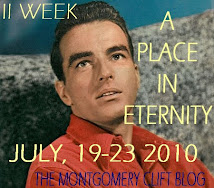
90th Anniversary of
Montgomery Clift's birth


90º Aniversario del nacimiento de Montgomery Clift (1920-2010)

aaaaa TODA LA INFORMACIÓN SOBRE EL ACTOR MONTGOMERY CLIFT EN ESPAÑOL aaaaa

For non-Spanish speakers:

You can translate this blog using Google translator widget. And you can always comment in your language, of course!

Yellow texts are in English

montgomery clift
montgomery clift

16.12.09

Artículo en inglés de la Wikipedia

Edward Montgomery Clift (October 17, 1920 – July 23, 1966) was an American film and stage actor. The New York Times’ obituary noted his portrayal of "moody, sensitive young men".[1] Clift received four Academy Award nominations during his career, three for Best Actor and one for Best Supporting Actor.[2]

Contents

Montgomery Clift was born in Omaha, Nebraska, a son of William Brooks Clift,[3] a vice-president of Omaha National Bank, and his wife, the former Ethel Fogg. Clift had a fraternal twin sister, Roberta (aka Ethel), and a brother, William Brooks Clift Jr (born 1918), who had an illegitimate son with actress Kim Stanley.

The future actor's mother, who was reportedly adopted at the age of one year, nicknamed "Sunny", spent part of her life and her husband's money seeking to establish the Southern lineage that reportedly had been revealed to her at age 18 by the physician who delivered her, Dr. Edward Montgomery, after whom she named her younger son. According to Clift biographer Patricia Bosworth, Ethel was the illegitimate daughter of Woodbury Blair and Maria Anderson, whose marriage had been annulled before her birth and subsequent adoption. This would make her a granddaughter of Montgomery Blair, Postmaster General under President Abraham Lincoln, and a great-granddaughter of Francis Preston Blair, a journalist and adviser to President Andrew Jackson, and Levi Woodbury, an Associate Justice of the Supreme Court. None of these relationships, however, has been proven and remain speculative in the absence of documentation.

As part of Sunny Clift's lifelong preparation for acceptance by her reported biological family (a goal never fully achieved), she raised Clift and his siblings as if they were aristocrats. Home-schooled by their mother as well as by private tutors in the United States and Europe, in spite of their father's fluctuating finances, they did not attend a regular school until they were in their teens. The adjustment was difficult, particularly for Montgomery. His performance as a student lagged behind that of his sister and brother.

Clift was educated in French, German, and Italian.

Film career


Clift at the premiere of A Place in the Sun (1951)

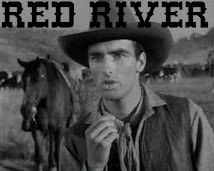
Appearing on Broadway at the age of 13, Clift achieved success on the stage and starred there for 10 years before moving to Hollywood, debuting in 1948's Red River opposite John Wayne.

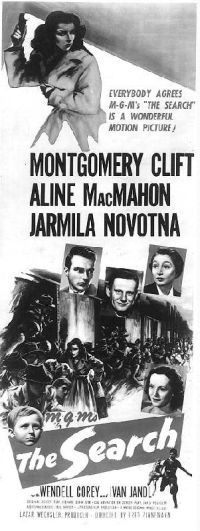
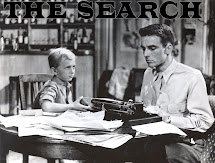
Clift was nominated for an Academy Award for Best Actor that same year for The Search. His sensitive and intense quality gave him an image as the kind of person to be taken care of.

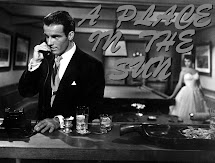
His love scenes with Elizabeth Taylor in A Place in the Sun (1951) represented a new standard for romance in cinema. His roles in A Place in the Sun, the 1953 classic From Here to Eternity, and The Young Lions (1958) were career milestones.

Clift and Marlon Brando, who was also born in Omaha, had reputations as Hollywood rivals because of their rapid rise to stardom and similar acting styles. Clift was one of James Dean's idols and he would sometimes call Clift "just to hear his voice".[4]

Clift reportedly turned down the starring roles in Sunset Boulevard and East of Eden.[citation needed] At one point he was receiving so many offers of roles that friends had to squeeze past stacks of them in order to walk up the stairs.[citation needed]

Car accident

On May 12, 1956, while filming Raintree County, he smashed his car into a telephone pole after leaving a party at the Beverly Hills home of his Raintree County co-star and close friend Elizabeth Taylor and her then-husband Michael Wilding. Alerted by friend Kevin McCarthy, who witnessed the accident, Taylor raced to Clift's side, manually pulling a tooth out of his throat, as he'd begun to choke on it. He suffered a broken jaw and nose, a fractured sinus, and several facial lacerations which required plastic surgery.[5] In a filmed interview, he later described how his nose could be snapped back into place.

After a long recovery, he returned to the set to finish the film. Against the movie studio's worries over profits, Clift rightly predicted the film would do well, if only because moviegoers would flock to see the difference in his facial appearance before and after the accident. The pain of the accident led him to rely on alcohol and pills for relief, as he had done after an earlier bout with dysentery left him with chronic intestinal problems. As a result, Clift's health and looks deteriorated considerably.

Post-accident career


Clift in trailer from The Young Lions (1958).

His post-accident career has been referred to as the "longest suicide in Hollywood history" because of his alleged substance abuse.[6] Clift continued to work over the next 10 years. His next three films were Lonelyhearts (1958), The Young Lions (1958) and Suddenly, Last Summer (1959). Clift starred with Lee Remick in Elia Kazan's Wild River in 1960. In 1958, he turned down what became Dean Martin's role in Rio Bravo, which would have reunited him with John Wayne.

He then costarred in John Huston's The Misfits (1961), which turned out to be Marilyn Monroe and Clark Gable's last film. Monroe, who was also having emotional problems at the time, famously described Clift as "The only person I know who is in worse shape than I am." By the time Clift was making John Huston's Freud: The Secret Passion (1962) his destructive lifestyle was affecting his health. Universal sued him for his frequent absences that caused the film to go over budget. The case was later settled out of court; the film's success at the box office brought numerous awards for screenwriting and directing, but none for Clift himself. Some time after the initial release of the film Clift appeared on the The Hy Gardner Show where he spoke at length about the accident and its effects, his film career, and treatment by the press. During the interview Gardner mentions that it is the "first and last appearance on a television interview program for Montgomery Clift".

Clift's last Oscar nomination was for best supporting actor for his role in Judgment at Nuremberg (1961), a 12-minute part. The film's director, Stanley Kramer, later wrote in his memoirs about how Clift—by this stage a wreck of a man—struggled to remember his lines even for this one scene:

Finally I said to him, "Just forget the damn lines Monty. Let's say you're on the witness stand. The prosecutor says something to you, then the defence attorney bitterly attacks you, and you have to reach for a word in the script. That's all right. Go ahead and reach for it. Whatever the word may be, it doesn't really matter. Just turn to (Spencer) Tracy on the bench whenever you feel the need, and ad lib something. It will be all right because it will convey the confusion in your character's mind." He seemed to calm down after this. He wasn't always close to the script, but whatever he said fitted in perfectly, and he came through with as good a performance as I had hoped.[7]

Death

On July 22, 1966, Clift spent most of the day in his bedroom in his New York City townhouse, 217 East 61st Street. He and his live-in personal secretary, Lorenzo James, had not spoken much all day. At 1 a.m., Lorenzo went up to say goodnight. The Misfits was on TV that night, and Lorenzo asked Clift if he wanted to watch it. "Absolutely NOT!" was the reply. This turned out to be the last time Montgomery Clift spoke to anyone. At 6 a.m. the next day, Lorenzo went to wake him but found the bedroom door locked. Unable to break it down, he ran down to the garden and climbed a ladder to the bedroom window. When he got inside, he found Clift dead. He was undressed, lying on his back in bed, with glasses on and fists clenched.[8]

Clift's body was taken to the city morgue at 520 First Avenue and autopsied. The autopsy report cited the cause of death as a heart attack brought on by "occlusive coronary artery disease". No evidence was found that suggested foul play or suicide. It is commonly believed that addiction was responsible for Clift's many health problems and his death. In addition to lingering effects of dysentery and chronic colitis, an underactive thyroid was later revealed. A condition that (among other things) lowers blood pressure, it may have caused Clift to appear drunk or drugged when he was sober. (A further health issue, though unrelated, was that Clift underwent cataract surgery in his later years; afterward he had to wear glasses.)

Following a 15-minute ceremony at St. James Church attended by 150 guests including actresses Lauren Bacall and Nancy Walker, Clift was buried in the Quaker Cemetery, Prospect Park, Brooklyn, New York City. Elizabeth Taylor, who was in Paris, sent flowers, as did Roddy McDowall, Myrna Loy, and Lew Wasserman.

Relationships

Patricia Bosworth, who had access to Clift's family and many people who knew and worked with him, writes in her book, "Before the accident Monty had drifted into countless affairs with men and women. It suited his personality to have sex with a variety of partners. After the accident and his drug addiction became more serious, Monty was often impotent, and sex became less important to him anyway. His deepest commitments were emotional rather than sexual, and reserved for old friends; he was unflinchingly loyal to men like William "Bill" LeMassena and women like Elizabeth Taylor, Libby Holman, Nancy Walker and Ann Lincoln."

When he bought his Manhattan townhouse in 1960 at 217 East 61st Street[9] and became involved in renovations, he reported to a close friend that he envisioned living there someday with a wife and children.[10] According to another biography, Clift's last known lover was Claude Perrin, a Frenchman who eventually became the actor's personal assistant before their relationship ended in the mid 1960s..[citation needed]

Portrayals

Awards and honors


Clift in a trailer screenshot of the 1948 film The Search, for which he was nominated for an Academy Award for Best Actor.

Clift has been honored with a star on the Hollywood Walk of Fame at 6104 Hollywood Boulevard and received four nominations for Academy Awards:

Filmography

Year Film Role Notes
1948 The Search Ralph 'Steve' Stevenson Nominated — Academy Award for Best Actor
Red River Matthew 'Matt' Garth
1949 The Heiress Morris Townsend
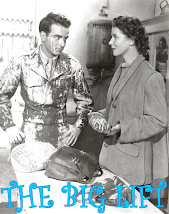
1950 The Big Lift Sgt. 1st Class Danny MacCullough
1951 A Place in the Sun George Eastman Nominated — Academy Award for Best Actor
1953 I Confess Fr. Michael William Logan Directed by Alfred Hitchcock
Terminal Station Giovanni Doria aka Indiscretion of an American Wife
From Here to Eternity Pvt. Robert E. Lee 'Prew' Prewitt Nominated — Academy Award for Best Actor
1957 Raintree County John Wickliff Shawnessy
"Operation Raintree" Himself Short subject
1958 Lonelyhearts Adam White
The Young Lions Noah Ackerman
1959 Suddenly, Last Summer Dr. Cuckrowicz
1960 Wild River Chuck Glover Directed by Elia Kazan
1961 The Misfits Perce Howland
1961 Judgment at Nuremberg Rudolph Petersen Nominated — Academy Award for Best Supporting Actor
Nominated — BAFTA Award for Best Actor in a Leading Role
Nominated — Golden Globe Award for Best Supporting Actor – Motion Picture
1962 Freud Sigmund Freud
1966 The Defector Prof. James Bower

Stage appearances

  • Fly Away Home (1935)
  • Jubilee (1935)
  • Yr. Obedient Husband (1938)
  • Eye On the Sparrow (1938)
  • Dame Nature (1938)
  • The Mother (1939)
  • There Shall Be No Night (1940)
  • The Skin of Our Teeth (1942)
  • The Searching Wind (1944)
  • Foxhole in the Parlor (1945)
  • You Touched Me (1945)
  • The Seagull (1954)

References

  1. ^ Montgomery Clift Dead at 45; Nominated 3 Times for Oscar; Completed Last Movie, 'The Defector,' in June Actor Began Career at Age 13 July 24, 1966, Sunday Page 61
  2. ^ "Montgomery Clift". Oscars.com. http://awardsdatabase.oscars.org/ampas_awards/DisplayMain.jsp;jsessionid=9B962145FA7D4F1CD88528D4248E2DFD?curTime=1265031101666. Retrieved 2010-02-01.
  3. ^ http://www.wargs.com/family/ancestry.html
  4. ^ Montgomery Clift: A Biography, by Patricia Bosworth
  5. ^ Montgomery Clift Official Site
  6. ^ Clarke, Gerald. "Books: Sunny Boy". Time Magazine 20 Feb 1978.
  7. ^ Kramer, Stanley; Thomas H. Coffey and Thomas M. Coffey (1997). A mad, mad, mad, mad world: a life in Hollywood. Harcourt Brace. p. 193. ISBN 0151549583. http://books.google.com/books?id=WgWXG1WyEh8C.
  8. ^ Patricia Bosworth, Montgomery Clift: a Biography. James had been hired to help Clift restore his health while he waited out a lawsuit with a movie studio.
  9. ^ "A Place in the Sun, on East 61st Street: Montgomery Clift's house goes on the market," New York Magazine, June 12, 2006
  10. ^ Biography channel: Montgomery Clift

External links

Montgomery Clift at the Internet Movie Database

* Para ver el artículo en español ver post.

14.12.09

James Dean

A finales de 1953, Monty empezó a oír hablar mucho de un actor de 21 años llamado James Dean.

"Es un novato de mucho talento -decía Elia Kazan-. Le gustan los coches de carreras, las camareras y los camareros. Dice que tú eres su ídolo."
"Estaba influido por Brando, pero se sentía más atraído por Monty -dice Bill Gunn, amigo de Monty y también buen amigo de Dean-. Jimmy descubría la fraccionada personalidad de Monty, su calidad dislocada. Brando era demasiado evidente, Monty tenía más clase."
Según Gunn, se menospreciaba a Dean por imitar a Clift y Brando, pero según él, aquello era necesario en los años 50.

"Monty y Brando apadrinaron a toda una generación de actores: Al Pacino, Jack Nicholson, Dustin Hoffman, Robert de Niro. Monty era la primera estrella cinematográfica que parecía obsesionada, algo demencial. Se manifestaba una tremenda resistencia a la locura de los 50's , y Monty era inquietante."
Tras un periplo autoestopista, el joven Dean llegó a Nueva York y después de meses de audición en audición, logró un trabajo regular en la televisión. Consiguió el teléfono de Montgomery Clift, que no figuraba en la guía, y le llamaba repetidamente.

"Principalmente para escuchar el sonido de mi voz -dijo Monty, que trataba de evitar tales llamadas-. Se limitaba a decirme:
"Hola... aquí James Dean... ¿cómo estás?"
"¿Qué diablos esperaba que le dijese? ¡Hola, hombre! ¿Y tú, cómo estás?"
Luego supo que hacía lo mismo con Marlon Brando y que firmaba algunas de sus cartas como James Brando-Clift Dean (ver post). Cómo comprendo al bueno de Jimmy Dean; yo hubiera hecho lo mismo.

Montgomery Clift vio a James Dean por la televisión en un papel de adolescente con un caso psicológico reminiscencia del suyo en Dame Nature. Su único comentario al respecto fue:

"Dean es extraño"
No lo vio en cambio actuar en Broadway en El Inmoralista pero seguía su carrera y preguntaba por él a amigos mutuos. Los papeles de gemelos de Al este del edén, ofrecidos a Brando y Clift, recayeron en Dean y Dick Davalos. Durante su rodaje, Monty oyó hablar mucho de la producción, sobre todo de James Dean. Un amigo le dijo que no importaba su comportamiento brusco y misántropo, que se estaba entregando a su papel y que estaba realizando una interpretación increíblemente intensa de Cal (el papel que ofrecieron originariamente a Brando; a Clift le ofrecieron el de Aron, el hermano bueno).

Aún más intrigantes para Monty fueron las habladurías sobre la prueba cinematográfica de Dean y Dick Davalos (que hacía de hermano bueno, el papel que originariamente ofrecieron a Clift). La escena en el dormitorio de Cal tenía alusiones homosexuales que en la película se suprimieron.

En la biografía de Patricia Bosworth se dice que Montgomery Clift se negó a conocer a James Dean siempre que tuvo oportunidad de hacerlo. Pero no dice nada más. Sin duda, James Dean haría todo lo posible para conocer al que era su ídolo y aunque al principio se acercó a él como un fan con las llamadas telefónicas, a medida que ascendía su carrera tuvieron amigos comunes (se ha nombrado antes a Bill Gunn, estaría Brando y la propia Liz Taylor). No sé si Montgomery Clift saludó en alguna ocasión a James Dean. Yo he buscado una fotografía de ambos que sería la prueba de ese encuentro pero creo que no existe.

En el verano de 1955, Montgomery Clift y Libby Holman viajaron por toda Italia durante casi 3 meses y cuando regresaron a Nueva York, él se instaló en la casa de piedra de ella. Libby solía despertarle llevándole el desayuno y la prensa. Una mañana había una noticia fatal: la muerte en accidente de coche de James Dean a los 24 años. A Libby le impresionó la noticia:

-¿No es terrible lo sucedido a Jimmy Dean? Ha muerto en un accidente de automóvil en la 66 conduciendo su Porsche plateado. Se ha roto la nuca y se ha clavado el volante en el pecho.
Monty se sentó en la cama echando a un lado las sábanas blancas de satén.

- La muerte de James Dean me causó una profunda impresión - le dijo Monty Clift a Bill Gunn-. En el momento de enterarme de ello vomité y aún no sé por qué.
A los seis meses, él sufrió su aparatoso accidente de coche del que se salvó pero no se recuperó.


En la biografía de Patricia Bosworth se dice que Monty y Libby volvieron a Nueva York en octubre. La muerte de Dean ocurrió el 30 de septiembre. Sería el 1 o el 2 de octubre como muy tarde.

13.12.09

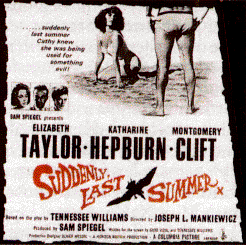
Suddenly, last summer.- comentario de Judith M. Kass

Cuando Montgomery Clift buscó un asegurador en Nueva York para poder hacer Suddenly, last summer (De repente el último verano, 1959), estaba tan nervioso e incoherente que los doctores no dieron un dictamen favorable. Lo intentó de nuevo en Londres, donde se rodó la película, pero estaba tan consumido por los fármacos que tomaba que tampoco encontró ningún doctor que lo avalara. la producción de la película empezó sin que Clift estuviera asegurado.

Mercedes McCambridge, que interpretaba el papel de la madre de Elizabeth Taylor en la película, declaró:

"Todos los implicados en la película estaban pasando por algún tipo de angustia personal, y eso se nota. Monty sufría un verdadero tormento. Aún lo recuerdo, con su espalda encorvada... siembre bajo esa terible tensión."

El ambiente atormentado de la película tenía su réplica en las vidas reales de sus actores: Katharine Hepburn estaba preocupada por Spencer Tracy, Elizabeth taylor, que se acababa de casar con Eddie Fisher, todavía lloraba la muerte de Mike Todd. Albert Dekker murió poco después de finalizar la película, y el director, Joseph L. Mankiewicz, llevaba guantes para ocultar una enfermedad de la piel.

La película en la que estos actores estaban implicados era una vaporosa mezcla de venalidad y locura,

12.12.09

Young Monty (11)

Image and video hosting by TinyPic

11.12.09

Clift Family Papers.- biblioteca y archivo estatal de Tennesse

Los Clift, la familia paterna de Montgomery Clift, eran una familia sureña proveniente de Tennessee. He contactado con la Biblioteca de Nashville, capital de ese estado y me han proporcionado la siguiente documentación. Es una información acerca de William Clift y su hijo Moses Clift, bisabuelo y abuelo respectivo de Montgomery Clift quienes lucharon en bandos diferentes (de la Unión y Confederado) en la Guerra de Secesión. La documentación que se conserva de esta familia es desde 1820 aproximadamente hasta 1968 (tan sólo 2 años despuñes de la muerte del actor).

(English text)


State of Tennessee
Department of State
Tennessee State Library and Archives
403 Seventh Avenue North
Nashville, Tennessee 37243-0312

CLIFT FAMILY PAPERS
ca. 1820-1968


Processed by:
Jean B. Waggener
Archival Technical Services

Accession Number: 1968.383
Date Completed: December 3, 1968
Location: VI-F-4

INTRODUCTION

The Clift Papers, ca. 1820-1968, are photocopies of originals owned by William Clift, Rowland, Swarthmore, Pennsylvania. The materials in this finding aid measure .42 linear feet. There are no restrictions on the materials. Single photocopies of unpublished writings in the Clift Family Papers may be made for purposes of scholarly research.

SCOPE AND CONTENT

The Clift Family Papers containing approximately 150 items (269 photocopies), span the years from ca. 1820 to 1968 and are composed of Civil War letters, Bible records, a deed, wills, genealogical data and correspondence, historical and biographical sketches, D.A.R. and Daughters of 1812 applications, and other papers.

Of special interest to the historian are the letters (August 20, 1863 to October 27, 1864) of Colonel William Clift, 7th Tennessee Regiment, U.S.A., his second wife, Elizabeth, and other members of the family in Kentucky. Clift’s letters, written largely from Knoxville, Knox County, Chattanooga (Hamilton County), and Soddy (Hamilton County), Tennessee, reflect his movement and conditions in Kentucky, his imprisonment in Atlanta, and his activities in east Tennessee, where he carried messages for the Federals through Confederate lines. There are two letters reassuring Mrs. Clift of her husband’s safety, one (March 20, 1864) written by Major General George H. Thomas, and another (September 24, 1864) written by a member of his staff. One letter (undated) from Clift’s brother-in-law tells of the excitement in Kentucky regarding the Negro question, mentioning that Colonel Frank L. Wolford has denounced the President as a traitor and that Kentucky Governor Thomas E. Bramlett did not reply to the charge. During March and April 1864, Colonel Clift wrote to his wife from Soddy, Tennessee, about the possibility of her joining him, but cautioned her that there were robbers everywhere. Clift’s views toward slavery are revealed in his statements that he favored the proposal to emancipate the slaves and to leave them in the states where they “respectively belong and let them do the labor in freedom that they have done in slavery.”

The Clift family papers, including a sketch concerning how the Civil War in east Tennessee affected the Clift family, center around Hamilton County, Tennessee, while the McDonald and some of the other families followed the familiar migration pattern from southwest Virginia through east Tennessee, and on to Texas. Other family lines settled in Maryland, North Carolina, and Kentucky. Since the families in this collection are so closely related, the researcher should consult folders for any families into which their lines married.
Included is genealogical information for the Brooks, Brothers, Clift, Doughty, Fowler, Hutcheson, Kearley, McDonald, Rawlings, and Rowland families.


BIOGRAPHICAL SKETCH


Colonel William Clift

- 1794? December 5, born in Greene County, Territory of the United States South of the River Ohio (now Tennessee) In childhood Went to Knox County, Tennessee, with his father.
- 1823 April 25, married Nancy Brooks (1795-1847), daughter of General Moses Brooks of Knox County; children by this marriage: James Warren, Mary Ann, Joseph, Robert Brooks, America W., Elizabeth Agnes and Moses H.
- 1824-1825 Settled in Hamilton County, Tennessee, and became the first millionaire and one of the largest land owners who ever lived there
- 1828 Helped organize and became a charter member of the Soddy Presbyterian Church, which was first called Mount Bethel Church; was a ruling elder and clerk of the session for 40 years
- 1848-1855 Served as Commissioner of Improvement for the U.S. Government prior to 1861 Commanded the Hamilton County militia for many years; was a magistrate.
- 1861 Although he was far past the age for military service, he declared himself for the Union and organized the Seventh Tennessee Federal Regiment, of which he was elected Colonel. This regiment had no Federal authority atfirst and was considered by some to be a guerrilla regiment. On November14, 1861, Governor Isham G. Harris issued an order to capture Clift and his men, dead or alive. Two of Clift’s sons served with him in the 7th Regiment, while two sons and the husbands of his three daughters were in the Confederate Army.
1861, Nov. Clift’s regiment disbanded, with Clift and three of his men voting to stay in the area, 100 of the men seeking to join Federal forces in Kentucky and 200 of the men voting to disperse
- 1862, June Clift recruited men in Morgan, Scott and Anderson counties, Tennessee, for a regiment to be called the 7th Tennessee Volunteer Regiment.
- 1863 Married Elizabeth
1863 October 24, was captured by Confederate troops commanded by his son, Moses H. Clift, while he was attempting to carry dispatches from the Federal commanders in Chattanooga – then in a state of siege – to General Burnside in Knoxville
- 1864 early February, escaped from from prison in Atlanta, Georgia
- 1866 February 27, died in Hamilton County, Tennessee; buried in the Soddy Presbyterian Church Cemetery.

References:
1. Armstrong, Zella. The History of Hamilton County and Chattanooga, Tennessee, Vol. I. Chattanooga, Tennessee, The Lookout Publishing Company, 1931.
2. Tennesseans in the Civil War, Part I. Nashville, Tennessee, Civil War Centennial Commission, 1964.
3. Data in the manuscript papers.

CONTAINER LIST
Box 1
1. Aids to the researcher – Notes re the collection, its compiler, and genealogical
research
2. Civil War letters – Clift, William, Col., 7th Tenn. Regt., U.S.A., 1863-1864, containing letters from family and from Major General George H. Thomas
3. Genealogical Data – Brooks family
4. Genealogical Data – Brothers family
5. Genealogical Data – Clift family
6. Genealogical Data – Doughty family
7. Genealogical Data – Fowler family
8. Genealogical Data – Hutcheson family
9. Genealogical Data – Kearley family
10. Genealogical Data – McDonald family
11. Genealogical Data – Rawlings family
12. Genealogical Data – Rowland family
13. Genealogical Data – Rowland family
14. Sketches—Biographical – Rowland, Martha Cheatham (Fowler), 1852-1935
15. Sketches – General – The Civil War in Eastern Tennessee and How It Affected the Clift Family of Hamilton County.

9.12.09

Clippings

8.12.09

Montgomery Clift en Filmaffinity

En esta web de cine aparecen 16 películas de Montgomery Clift. La que falta es la última, The Defector (El desertor, 1966).

Éstos son los enlaces de cada una de las películas. Incluyo la breve sinopsis de la web, las opiniones de críticos destacados y entre paréntesis el número de críticas de los usuarios de la web:


* The Search (4)

Film semi-documental sobre un soldado americano que ayuda a un niño, superviviente de Auschwitz, a buscar a su madre. Debut del gran Montgomery Clift. (FILMAFFINITY)

* Red River (25)

Tras la Guerra de Secesión, el ganadero Tom Dunson (John Wayne) y su hijo adoptivo Matthew Garth (Montgomery Clift), supervivientes de una matanza llevada a cabo por los indios, proyectan trasladar diez mil cabezas de ganado dessde Texas hasta Missouri. Nadie hasta entonces había intentado trasladar tanto ganado. (FILMAFFINITY)

Ver "Río Rojo" es una clase que enseña a amar el nostálgico y épico género del western. El maestro Hawks contó con un reparto maravilloso -en el que destaca el debut del insuperable Montgomery Clift- para dar vida a unos vaqueros que conducen el ganado en un largo viaje de millas y polvo, de aventuras y cambiantes relaciones humanas. De entre los clásicos del western, sin duda uno de los mejores. (Pablo Kurt: FILMAFFINITY)


"Western épico que muestra la relación, con sus dosis de problemática generacional, de un viejo ranchero y su hijo adoptivo. Maravillosas interpretaciones y una narración de lo más conseguida para un clásico del género" (Fernando Morales: Diario El País)

* The Heiress (27)

Adaptación de la famosa novela de Henry James, ambientada en la New York de mediados del siglo XVIII, donde una joven heredera poco agraciada físicamente y a punto de abandonar la juventud es pretendida por un apuesto joven que sólo busca su dinero. Aunque su amor por el joven es ciego, su despótico padre la obligará a abrir los ojos a la cruda realidad...

"Densa trama (...) la elegancia visual de Wyler crea una puesta en escena que resulta un compendio de sabiduría y sensibilidad artística, y sumerge de lleno al espectador en un atormentado melodrama" (Miguel Ángel Palomo: Diario El País)

7.12.09

Raintree County.- comentario de Judith M. Kass

La novela de Ross Lockridge Jr., Raintree County fue un éxito de ventas cuando se publicó en 1949. La Metro Goldwyn Mayer consiguió hacerse con los derechos, pero nadie en el estudio era capaz de extraer de ella una adaptación lo bastante satisfactoria para llevarla a la pantalla. Dore Schary, que entonces era el vicepresidente del área de producción, decidió que sería demasiada cara de rodar y abandonó el proyecto. Siete años más tarde, Millard Kaufman fue el encargado de transformar las 1066 páginas de Lockridge en un guión, y Schary accedió a incluir El árbol de la vida en sus planes de producción.

El árbol de la vida es una novela que se lee como una película. Está llena de flashbascks, de hechos históricos y de personajes llenos de color cuyos diálogos dan vida al guión. La película está construida como una novela: con un principio, una parte central y un final, en este mismo orden. Empieza en 1859, con la graduación de John Wickliff Shawnessy y de Nell Gaither en la escuela secundaria de Fairhaven, Indiana. Su maestro, Jerusalem Webster Stiles, les habla acerca de un árbol dorado que representa la verdad y la felicidad, y que está escondido en alguna parte del condado. A partir de entonces, Johnny se popone salir en su búsqueda inmediatamente. A pesar de que Nell y Johnny son novios, él se casa con una belleza del sur, Susanna Drake, cuando ésta le informa que está esperando un hijo suyo. Susanna le ha mentido para conseguir que Johnny se case con ella, pero después de un viaje al sur en el que Johnny se da cuenta de que la chica tiene problemas mentales (teme obsesivamente al cruce de razas y un cierto misterio envuelve la muerte de sus padres en un incendio), se queda realmente embarazada.

Estalla la guerra civil, pero Johnny se queda en casa, da clases en la escuela y cuida de su hijo Jimmy y de su cada vez más enloquecida esposa. Susanna se escapa con Jimmy y Johnny se enrola en el ejército de la Unión para intentar encontrarles. Más tarde encontrará a su hijo al cuidado de los antiguos esclavos de Susanna y se lo lleva detrás de las líneas de la Unión. Después de la guerra, Johnny encuentra a Susanna en un asilo para enfermos mentales y regresa con ella a Indiana. Aparentemente recuperada, pero convencida de que su comportamiento ha impedido
a Johnny seguir buscando el mítico árbol, Susanna se escapa una noche seguida por Jimmy, en busca del árbol. Al día siguiente, encuentran a Susanna muerta en los pantanos. Johnny y Nell, reunidos al fin, encuentran a Jimmy cerca del pie de un árbol dorado.

Raintree County fue un intento de la Metro de recuperar en otra película todos los elementos

6.12.09

5.12.09

Sesión de fotos.- comentarios

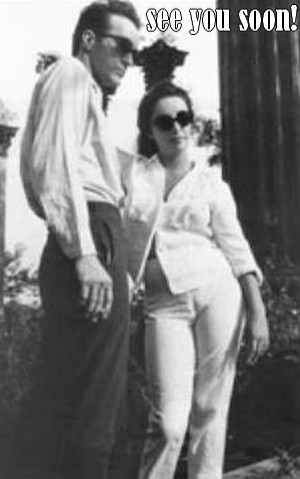
Esta foto es relativamente conocida. Desconozco la fecha y el momento en que fue tomada, a primera vista parece que pertenece a la época de From here to eternity por la camisa que luce Monty y estar posando al lado de unas plantas pero yo lo veo muy joven para esa época. La situaría en A place in the sun, donde también luce camkisisas similares.

La foto de la derecha es la que suele verse pero he encontrado la misma foto pero con mejor calidad, como realmente fue tomada. Y he encontrado una tercera foto, que tiene una misma pose pero en la que Monty cambia el cruce de brazos y se le ve el reloj.

No son unas fotos propiamente de estudio pero se ve que Monty posa ex profeso y no son perspnales. Al encontrar 3 fotos he preferido agruparlas.

Ver fotos.

Sesión de fotos


4.12.09

La historia de Treetops

Treetops, era la finca que tenía Libby Holman en Connecticut. Era una casa muy querida por ella y Monty acudió en muchas ocasiones a esa casa, en los años 40 acudía en compañía de amigos como los Green y los McCarthy y después del accidente acudía principalmente para desintoxicarse y descansar entre rodaje y rodaje.

Actualmente la finca ha sido consevada. En este artículo se explica la historia de la finca y cómo se ha podido conservar en la actualidad.

(English text)

History of Treetops State Park

Treetops is the local name for a parcel of the Mianus River State Park, owned by the CT Department of Environmental Protection (DEP) and located inmediately south of the Mianus River Park. We, the Friends of the MRP, include Treetops in our stewardship.

The following
The following article was written by the Stamford Land Conservation Trust (SLCT), one of the 4 holders of an Environmental Easement (the other holders are the Greenwich Land Trust, and the municipalities of Stamford and Greenwich).

=============================

Libby Holman, the SLCT and the Treetops Legacy

By Harry Day, Vice-President of the SLCT

As published in the Stamford Land Conservation Trust Spring 2009 issue of the Open Spaces newsletter. (view the SLCT website at http://www.stamfordland.org)

Few could have predicted that the flamboyant, scandal ridden and often tragic life—and death—of internationally famed torch singer Libby Holman would become forever intertwined with the mission of the Stamford Land Conservation Trust. After all, when Libby Holman died at her beautiful Treetops estate in 1971, the SLCT did not even exist. But nearly four decades later, Treetops owes its legacy to both Holman and the SLCT.

Libby Holman’s rise to stardom and the Reynolds scandal

Libby Holman, born in 1904, first attracted attention in the 1920’s as a Broadway actress with a sultry voice and voluptuous figure. She achieved stardom appearing with Clifton Webb in “The Little Show” in 1929 in which she sang “Moanin’ Low”, and “Three’s a Crowd” in 1930 in which she introduced “Body and Soul”. “Moanin’ Low” became a blues classic and her signature song, and would be performed often by Carly Simon decades later. Holman was credited with inventing the strapless dress, which helped her accentuate her smoky and sexually charged torch songs.

Holman’s personal life was constantly exotic if not chaotic. Her friends were often gay men, generally much younger than herself, foremost among them being Montgomery Clift. She would eventually have three husbands, but also maintained long-term and well publicized relationships with DuPont heiress Louisa d’Andelot Carpenter Jenny beginning in 1929, and with openly lesbian writer Jane Bowles starting in the 1940’s.

In 1931 at age 28, Libby Holman married tobacco heir Zachary Smith Reynolds who was just 20. Reynolds had been star-struck and had pursued her relentlessly. Even as Libby became pregnant, the marriage quickly deteriorated as Holman’s theatrical and flamboyant friends clashed with the conservative Reynolds and his family.

Less than a year after the marriage, at a lavish and alcohol-fueled party at the Reynolds family estate in North Carolina, Holman was with her husband when he was mortally shot. Libby and Ab Walker, a close friend of Reynolds who was rumored to be having an affair with Libby, were indicted for murder. Being intensely private and averse to scandal, the Reynolds family persuaded authorities to drop the charges, and the death was ruled a suicide. The inheritance left Holman and her son Christopher (whom she called “Topper”) fabulously wealthy.

The events surrounding Reynolds’ death received enormous publicity and became the basis of David O. Selznick’s 1935 movie “Reckless”, starring Jean Harlow.

Following the Reynolds scandal, Holman and Christopher lived with Louisa for the remainder of the 1930’s. Libby returned to Broadway in 1934 performing in “Revenge with Music” (singing “You and the Night and Music”) and she became a fixture in New York nightclubs. She was offered but turned down the lead in Cole Porter’s “Anything Goes”, leaving the role to an unknown secretary named Ethel Merman. Holman could not escape the cloud of the Reynolds scandal and was often welcomed with hisses and boos, though many felt that the scandal actually enhanced her career.

Treetops and Holman’s later years

It was during the 1930s that Holman purchased 55 acres straddling the Stamford-Greenwich border on the Mianus River. The neo-Georgian mansion was completed in 1938, creating the estate known as “Treetops”. In love with the natural beauty of the area, Holman subsequently purchased adjacent parcels as they became available, eventually expanding the estate to 110 acres. Over the years she planted daffodils by the tens of thousands, creating new varieties that became a spectacle of color each year in April.

Holman entertained lavishly at Treetops in the 1940s and 1950s. Guests included her long-time friend Montgomery Clift, Truman Capote, Tallulah Bankhead, Imogene Coca, Martha Raye, Roddy McDowell, Tennessee Williams, Elizabeth Taylor and Michael Todd (who proposed marriage to Taylor in the mansion’s elegant private library).

Tragedy continued to befall Holman when her second husband, actor Ralph Holmes, committed suicide after returning from service in World War II. This earned Holman the label “Death Angel” among some who found morbid interest in the circumstance that two significantly younger husbands had both died at very young ages. At the time of Holmes’ death, Libby apparently had already begun a long-lasting relationship with Jane Bowles, wife of openly gay author Paul Bowles. It was during this time that Holman created a stir by appearing and touring with famed black guitarist and blues singer Josh White. In 1947, she starred with White in the movie “Dreams that Money Can Buy”.

The most devastating tragedy for Libby Holman was the death in 1950 of her beloved son Christopher, at age 17, from a mountain climbing accident. To honor him she started the Christopher Reynolds Foundation, dedicated to the cause of racial justice and equality. She appeared on Broadway for the last time in 1954 at the age of 50 in a one-woman show entitled “Blues, Ballads and Sin-Songs”. Most of her later appearances were benefits for civil rights and United Nations causes.

In 1959, through the Foundation, she sponsored a trip to India by Dr. Martin Luther King and his wife Coretta Scott King so that they could meet and study with Mahatma Gandhi. She became personally close with the Kings and entertained them at Treetops.

For many years, Holman did volunteer work one day a week at Stamford Hospital, and would occasionally be spotted in Stamford or Greenwich being chauffered in her Rolls-Royce. One week every year, she opened Treetops to the public for a Daffodil Festival, the proceeds of which benefited local charities including the Visiting Nurses Association and the Stamford Girls Club. The Daffodil Festival became an annual tradition that continued until recent years.

Holman became progressively more depressed and reclusive and her third marriage—to artist and sculptor Louis Schanker in 1959—was stormy. Schanker, reportedly extremely jealous of Libby’s continuing relationship with Jane Bowles and resentful of her gay friends of both sexes, banned them from Treetops. Schanker spent a great deal of his time in a studio that Holman constructed for him on the grounds of Treetops.

Holman rarely entertained at Treetops after her marriage to Schanker. Jane Bowles’ debilitating stroke, the assassination of Martin Luther King, and the death of her mother and that of Montgomery Clift all had a profound effect on Holman, leading her further into isolation and alcoholism. On June 18, 1971, at 67, she was found in the garage at Treetops, slumped over in her Rolls-Royce, and was declared dead after being rushed to the Stamford Hospital. The coroner found she was legally drunk, and ruled the death a suicide. According to Paul Bowles, few of her friends ever accepted the coroner’s finding, maintaining that she would have been too weak to close the garage door by herself and citing the fact that the car’s ignition had been turned off. Coretta Scott King was among the illustrious group that gathered for Holman’s memorial service.

The fate of Treetops

As a committed conservationist, and determined to save Treetops from development, Libby Holman had bequeathed it to Boston University for a fine arts center and parkland. However, the University determined that it could not operate and maintain the property, and returned it to the estate in 1976.

In 1978, in a move to fulfill Libby Holman’s wishes, the mansion and the 40 acres located in Stamford were offered as an outright gift to the City as a cultural center and parkland. Despite the support of then Republican Mayor Louis Clapes and overwhelming public support for accepting the generous offer, the Stamford Board of Finance failed to approve a proposal that would have set aside $58,000 annually to maintain the property. The gift was rejected. Republican Leonard Vignola, a purported conservationist, cast the deciding vote, asserting that the City did not have the resources to care for the property.

The City’s lost opportunity became painfully evident when, within two years, the mansion and the 40 acres in Stamford were sold to Stamford-based Champion International Corp. for $2 million. The company purchased the 70 acres in Greenwich for $2.5 million. Champion operated Treetops as a corporate guest and conference center and won high marks for corporate citizenship by caring for the property, allowing access via trails from the adjacent Mianus River Park, and continuing the annual Daffodil Festival.

The final battle to save Treetops

In the spring of 1997, Champion announced its intention to sell Treetops, kicking off a four-year battle to save the property from development. No price was announced. A group including SLCT President Percy Lee Langstaff, Peter Moss of the Mianus River Greenway Alliance, and several other open space advocates met with Cummings and Lockwood Attorney Ralph Nichols (who had represented the Libby Holman estate) to discuss the prospect of raising enough money to buy Treetops and preserve it, or persuading Champion to donate at least part of the land or accept a reduced price for it if it could be preserved.

A bipartisan array of political leaders took notice, among them Democrats Mayor Dan Malloy and State House Majority Leader Moira Lyons of Stamford, and Republicans State Senator William Nickerson of Greenwich, Congressman Chris Shays and Greenwich First Selectman Tom Ragland.

The effort seemed to be dealt a setback when, in early 1998, Champion announced it had signed a contract to sell the property to New Canaan-based Toombs Development Co. for the construction of 55 luxury homes projected to cost $4 million each. But the awareness created by Percy Lee Langstaff and others would soon prove beneficial. In March of 1999, after negotiating for a year with authorities in Greenwich and Stamford, the Greenwich Planning and Zoning Commission rejected the plan for building 30 homes on the 70 acres in Greenwich. Environmental reasons relating to wetlands, glacial boulders, and possible impact on the Mianus River were cited. The Toombs plan did not go forward.

Public consciousness and concern over the future of Treetops was acute when it became known in September 2000 that International Paper (which had acquired Champion International) had signed a letter of intent to sell the property to New York developer Brickman Associates for $15 million. Behind the scenes, however, the communities of Stamford and Greenwich and the State of Connecticut, together with the Trust for Public Land (a national facilitator for saving open space), had made clear that they would present a credible offer for the property if given the chance.

On October 17, International Paper and the Trust for Public Land announced an agreement that would make possible the protection of 105 acres of the Treetops property, excluding the mansion and its immediate grounds, for a total purchase price of $11.5 million. In order to buy 100 days, TPL had already stepped forward with a deposit of $500,000 which would be refunded if the deal could be closed but forfeited if not. The State of Connecticut DEP had already agreed to contribute $3.5 million, but the deal was contingent on raising $8 million additional funds by January 31, 2000. Otherwise, IP would consummate its letter of intent with Brickman.

The proposed transaction called for the City of Stamford to purchase a conservation easement for $1.5 million on the 35 acres in Stamford, and for the Town of Greenwich to come up with $3.5 million for a similar easement on the 70 acres in Greenwich. The remaining $3 million would have to be raised entirely from private sources—within 100 days.

The agreement was made possible by the collaboration of Governor John Rowland and the Connecticut DEP, the Trust for Public Land, International Paper, Mayor Malloy and key members of the Stamford Board of Representatives, Greenwich First Selectman Lolly Prince, Congressman Shays, Majority Leader Lyons, State Senator Nickerson, Senate Majority Leader George Jepsen from Stamford and State Rep. Dolly Powers of Greenwich.

The Town of Greenwich then determined that it would contribute $1.5 million of municipal funds rather than $3.5 million, and rely upon the Greenwich Land Trust to make up the difference. Saving Treetops thus rested on the ability of the Stamford Land Conservation Trust and the Greenwich Land Trust to raise $5 million in 100 days.

The Treetops legacy is saved

The New York Times, in an article entitled “Fund-Raisers Rush to Save Treetops—Seventy Five Days and Counting”, printed Sunday, January 7, 2001, captured the heroic and frenzied efforts of Percy Lee Langstaff and the SLCT:

“I’m receiving checks for $25 to $2,000 daily from ordinary citizens who care,” said Percy Lee Langstaff, President of the Stamford Land Conservation Trust. “And that’s terribly exciting that people care. We’re working like crazy.” ….

Greenwich Land Trust Vice President David Ogilvy was quoted as being “blown away” by the willingness of his members and the community to support the effort.

Thousands of citizens responded in an unprecedented show of public support for open space conservation, and the two organizations together raised the required $5 million before the deadline. The Trust for Public Land purchased 94 acres from International Paper and then transferred it to the Connecticut Department of Environmental Protection. Conservation easements were granted to the municipalities of Stamford and Greenwich, the Stamford Land Conservation Trust and the Greenwich Land Trust, and the Connecticut-American Water Company. International Paper retained ownership of the Treetops mansion and approximately 17 acres of adjoining land, with 11 acres covered by conservation easements.

The mansion was later sold by International Paper to SLCT friends Don and Lisa Brownstein, who have carefully restored many of the rooms to their original elegance. Through the generosity of the Brownsteins, Louis Schanker’s studio became the home in 2006 of the Treetops Chamber Music Society’s annual concert series. In addition, and fittingly enough, the studio was the site in 2006 of a tribute to Percy Lee Langstaff, honoring her for her thirty years’ service as President of the SLCT.

More than seven decades have passed since Libby Holman first set foot on the grounds of her treasured Treetops, and 38 years since she died. Thankfully, her passionate desire to have her property preserved was fulfilled through the determined and tireless efforts of the SLCT and all the other community organizations, leaders and donors who answered the call. The land remains pristine, and the trails a joy to hike. Treetops, its rich legacy intact, survives for future generations.

Sources: “Treetops: An Aura of Glamour, a Trail of Tragedies”, Jack Cavanaugh, NYT, 5/18/97; “Out of Treetops and a Sea of Daffodils, 55 Luxury Homes”, Jack Cavanaugh, NYT, 4/26/98; “Fund-Raisers Rush to Save Treetops”, Marilyn Shapiro, NYT, 1/7/01; “Dreams that Money Can Buy: The Tragic Life of Libby Holman”, Jon Bradshaw, 1985; “ Biography for Libby Holman”, Jack Backstreet, IMDb.com; “Libby Holman: A Brief Biography”, Paul Bowles, planetbowles.com; paulbowles.org; “Montgomery Clift”, Patricia Bosworth, 1990; Death in North Carolina's Piedmont, Frances H Casstevens.

3.12.09

Montgomery Clift: Man of great refinement

Un video que quiere mostrar lo que muchas veces no se reconoce: el gran talento de Montgomery Clift y su importancia en la Historia del Cine, adelantándose a tantos actores. Un video que muestra escenas diferentes de sus películas y sus fotos más conocidas. No aporta nada nuevo visualmente pero es un homenaje muy bueno para dar a conocer a Montgomery Clift hoy día.


"Before Dean... Before Brando... One of the most cultured and introspective film and theater actors. He is... Montgomery Clift"

El video es de TheBigValley y este es el texto que lo acompaña:

(English text)
Rich in culture, charm, humanity and talent. There are many Montgomery Clift's qualities that can be listed. Born in Nebraska in 1920, revealed early adolescence remarkable artistic gifts that he had occasion to express in the theater. California who watched carefully the actors who came from New York did not hesitate to contact Clift to propose auditions. Montgomery Clift reluctantly accepted. He did not like a genius California and preferred to return to New York. The first film role he accepted after much hesitation was that of (Matthew Garth) in Red River directed by Howard Hawks, where he was confronted with the great John Wayne. The success was The Search, which came out in theaters a few months before the Red River and this is considered the first appearance on the screens of Monty. From this point on begins the success that led him to work for great directors like Fred Zinnemann, George Stevens, Alfred Hitchcock, Vittorio De Sica. Of his 17 films in addition to those already mentioned it is worth remembering From Here to Eternity, A place in the sun, I confess, The Misfits, Judgement at Nuremberg, Freud. But despite the success, the admiration for him and comfort, the life of Monty will be a succession of difficult moments alternated with brief periods of happiness. Painful and leave marks on the life of this actor is unfortunately the car accident occurred in 1956, and gave him a facial surgery. Monty's life will change forever, but with the help of a few trusted friends (including a principal role will the Elizabeth Taylor) will be made less harsh and heavy.
I wanted to put together Monty Clift, James Dean and Marlon Brando for the way they have revolutionized the art of acting. All three introspective and all three came from the famous school in New York (the Actors Studio) But compared to Brando and Dean, Monty began some years before in the movies and had lots of experience with theater. Montgomery Clift died in a summer day in July 1966 of a heart attack. A few months later would have to begin working in Reflections in a Golden Eye. Character who was later given to Marlon Brando. Leaves a great legacy to all new generations of actors. The music is from the film Out of Africa composed by John Barry. The films included in the video are: The Search, Red River, The Heiress, A place in the sun, Indiscretion of an American wife, I Confess, From here to eternity, Raintree County, Lonelyhearts, The Misfits, Judgement at Nuremberg.

2.12.09

Photoplay.- Dic 1950

Revista de cine que en su número de diciembre de 1950 dedicaba la portada a la simpática June Allyson y en su interior ofrecía un reportaje sobre A place in the sun (Un lugar en el sol, 1951), titulado "Échale un vistazo" con 16 fotos en blanco y negro. Aunque no tengo el reportaje cabe suponer que hablaría del rodaje y probablemente cotillearía sobre la pareja formada por Liz Monty. La película aún se estaba rodando y no se estrenaría hasta el 28 de agosto de 1951.

Éstos son los datos de la revista:

(English text)

Vintage Movie Magazine Photoplay December 1950 with June Allyson on the cover.
Issue Includes: Dick Powell and June Allyson “I was there” (2 page color pic + 4 b/w pix), Marlon Brando “That mad man Marlon” (Color pinup + 1 b/w pic).

Elizabeth Taylor, Montgomery Clift and Shelley Winters “A Place in the Sun: Sneak Peek” (16 b/w pix)

Dan Dailey “Lost- their Blue Heaven” (large b/w pic + 1 b/w pic), Ann Miller “Glad hands” (8 b/w pix), “Pinups of 1951” (1 color pic of each): Virginia Mayo, Debra Paget, Shelley Winters, Ava Gardner, Vera Ellen, Lana Turner, Rita Hayworth, Betty Grable, Jane Russell, Ann Sheridan “Where will they go from here?” (1 color pic of each of the following): Sally Forrest, Peggy Dow, Mercedes McCambridge, Howard Keel, Tony Curtis (1 b/w pic of each), Jean Hagen, Piper Laurie, Nancy Davis. Movie Ads/Celebrity Endorsement Ads: Two Weeks with Love (Jane Powell, Ricardo Montalban), Breakthrough (David Brian, John Agar), All About Eve (Bette Davis), Virginia Mayo for Jergens Lotion, Ann Blyth and Craig Stevens for Lux Soap. Misc Pix throughout: Claudette Colbert, Sally Forrest and Howard Keel, Tony Curtis, Peggy Lee, Marlon Brando and Nancy Davis, David Wayne, Jeff Chandler, Piper Laurie and Hugh O’Brian, June Allyson and Dick Powell, Dorothy Lamour and Esther Williams, Shirley Temple, Van Heflin and Robert Mitchum, Kirk Douglas, Esther Williams and Arlene Dahl, Irene Dunne, Jane Russell, Judy Garland, William Holden, Scott Brady, Joan Crawford, Anne Baxter, Betty Hutton, Larry Parks, Jeanne Crain, rod Cameron, Mitzi Gaynor, Mona Freeman, Faith Domergue, Penny Singleton, Lois Butler, Gene Nelson, John Derek, Shelley Winters, terry moore, Hugh Marlowe, Betty Grable, Howard Duff, Ginger Rogers, Errol Flynn and Patrice Wymore, Esther Williams, Nancy Olson, Ella Rains, Ann Blyth.

1.12.09

Foto del mes (26)

Con su madre, Sunny Clift en la estación invernal de Saint Moritz

Como ya había comentado anteriormente, no conozco ninguna foto de Montgomery Clift esquiando. La única foto suya que tengo en la nieve es esta de cuando era pequeño., con unos 8 años.


Para ver más fotos de la infancia de Monty ver este post.

25.11.09

The skin of our teeth.- programa

Dos ejemplares distintos de programas de la obra de teatro The skin of our teeths (La piel de nuestros dientes), obra de Thornton Wilder estrenada en 1942.

El primero es anterior al estreno en Broadway. Se trata de un programa de la representación de la obra en Washington D.C. del 9 al 14 de noviembre (6 días). Justo 4 días después tendría lugar el estreno en Broadway, el 18 de noviembre de 1942. Éstos son sus datos:

(English text)
Type : Playbill Original/Reproduction: Original Pre-Broadway
Date : Nov. 9-14, 1942 Category: Theatre Memorabilia
Sub-Category : New Comedy Author: Thornton Wilder
Title : The Skin of Our Teeth
20 pages.

Pre-Broadway ~ Playbill Program ~ Nov. 9-14, 1942
(Opened on Broadway at the Plymouth Theatre just 4 days later on Nov. 18, 1942 and ran for 359 performances) for National Theatre ~ Washington DC ”America’s First Theatre”.

Tallulah Bankhead, Fredric March, Florence Eldridge in THE SKIN OF OUR TEETH. A New Comedy by THORNTON WILDER with a company of forty including Florence Reed, MONTGOMERY CLIFT, E.G. Marshall Diane and Dickie (Dick) Van Pattan Included in this
Playbill Program:

• Beautiful Title Page with Cast Listing and Credits
• Program of the Play
• Cast of Characters
• Many great old Beer, Department Store, Restaurant, Fur Salon, Wine, Shoe, Night Club, Theatre, Real Estate, Jewelry, and Hotel Advertisments.


El segundo programa lo acompaño con una foto del interior.

19.11.09

Todas las películas de Montgomery Clift.- prólogo de Brooks Clift

Probablemente, lo que me ha inducido a escribir esta introducción sea mi admiración por el trabajo de investigación llevado a cabo por Judy Kass en este libro. Es visual y documental. Ha reunido una cantidad realmente increíble de fotografías que nos muestran tanto a la persona como a su obra.

A Monty le afectaba todo: era un hombre sin piel que le protegiera. Me sorprende cómo pudo sobrevivir a pesar de todsus problemas psíquicos, morales, físicos y legales, hasta la edad de 45 años. Él solía decir, observando a los hombres desde el punto de vista de un neurótico:
"Si uno no está
trastornado, los problemas se pueden solucionar fácilmente en un día, pero la
vida es demasiado complicada, particularmente si eres actor. No puedes vivir tu
vida con moderación o nunca aprenderás nada acerca de ti mismo o de la otra
gente. Pase lo que pase, te tienes que forzar para ser capaz de estar
profundamente comprometido y abierto a lo que pueda surgir, para ser siempre
inocente
."
Según esta filosofía, la única manera de sobrevivir era teniendo un increíble sentido del humor, de la ironía, del sarcasmo. Una vez afirmó:
"Lo que hace la
grandeza de un actor es lo mismo que hace la grandeza de una persona, el sentido
del humor
".
Para mí, uno de los momentos
Su carrera comprende 17 títulos entre 1948 y 1966. Trabajó con los grandes directores (Hawks, Hitchcock, Stevens, Zinnemann, Kazan, Huston, Wyler) y las grandes estrellas (Lancaster, Marilyn Monroe, Katherine Hepburn, Brando, Wayne, Elizabeth Taylor especialmente) de entonces.
The Right Profile
Lyric
Say, where did I see this guy?
In red river?
Or a place in the sun?
Maybe the misfits?
Or from here to eternity?

Everybody say, is he all right?
And everybody say, whats he like?
Everybody say, he sure looks funny.
Thats...Montgomery Clift, honey!

New York, New York, New York, 42nd street
Hustlers rustle and pimps pimp the beat
Monty Clift is recognized at dawn
He aint got no shoes and his clothes are torn

I see a car smashed at night
Cut the applause and dim the light
Monty's face is broken on a wheel
Is he alive? can he still feel?

Everybody say, is he all right?
And everybody say, whats he like?
Everybody say, he sure looks funny.
Thats...Montgomery Clift, honey!

Nembutol numbs it all
But I prefer alcohol

He said go out and get me my old movie stills
Go out and get me another roll of pills
There I go again shaking, but I aint got the chills