For non-Spanish speakers:
You can translate this blog using Google translator widget. And you can always comment in your language, of course!
Yellow texts are in English
montgomery clift
montgomery clift
En la Imdb, aparecen los datos de distribución de la película y son estos: | Country | Date |
|---|
USA | 23 March 1948 | (New York City, New York) |
| USA | 26 March 1948 |
|
| Denmark | 9 September 1948 |
|
| France | 7 October 1948 |
|
| Austria | February 1949 |
|
| Sweden | 14 February 1949 |
|
| Finland | 1 December 1950 |
|
| Japan | 1 June 1954 |
|
| West Germany | 2 June 1961 |
|
| Anjos Marcados | Portugal |
| Det dagas | Sweden |
| Die Gezeichneten | Germany |
| Et barn eftersøges | Denmark |
| Les anges marqués | France |
| Los ángeles perdidos | Spain |
| Odissea tragica | Italy |
| Paidia horis onoma | Greece |
| Suchende Herzen | Austria |
| Yksin maailmassa | Finland |
Aunque no aparece España, aquí se estrenó en torno a 1948 por los programas de mano que se han consercado.
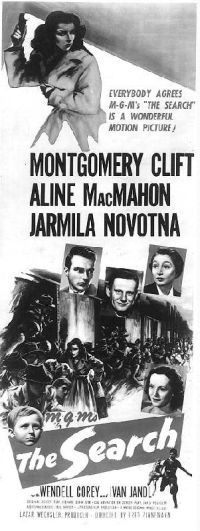
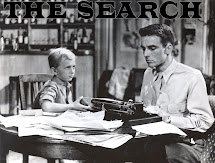
El 26 de marzo de 1948 (*) se estrenó The Search (Los ángeles perdidos, 1948) consiguiendo un aplauso unánime. De pronto, Montgomery Clift fue famoso. Joe Morella y Edward Epstein en su libro
The Rebel Hero in Films, escribieron:
"Se convirtió en un nuevo héroe del público de posguerra, un hombre a quien no le molestaba en absoluto revelar la vulnerabilidad y desilusión que el mundo producía a su conciencia."
En el New York Times apareció esta nota:
"The Search es absorbente, gratificante, un drama sentimental del más alto nivel."
El Tibune decía:
"Montgomery Clift está soberbio. En su papel de joven soldado que devuelve al niño europeo desamparado al redil de la humanidad, Clift consigue realmente la exacta combinación de intensidad y contingencia..."
El fotógrafo Richard Avedon vio la película poco después de su estreno y le dijo a Brooks, el hermano de Monty:
- En el momento en que Monty apareció en la pantalla lloré porque era muy realista y honrado y me impresionó profundamente. Parecía estar creando una nueva clase de interpretación, casi de documental. Tiene el estilo del reportaje.
Como dice Patricia Bosworth, el joven soldado que representa en el filme nunca es imitación, la composición de la representación tiene múltiples puntos de vista y está llena de detalles. Monty sabía cómo interpretar para el público y, por su experiencia en el escenario, también sabía cómo conseguir que el público compartiera su caracterización: tenía la habilidad de crear un mundo por sí sólo.
- Quién es ese soldado que actúa en el filme?- le preguntaron a Fred Zinnemann.
- Monty era tan condenadamente real en la pantalla - dice el director de la película, Fred Zinnemann-, que la gente no creía que fuese un actor profesional.
(*) El 24 fue la premiere y el 26 el estreno en cines.
Texto íntegro y original de la crítica que escribió Bosley Crowther del New York Times el 26 de marzo de 1948:(English Text)By Bosley Crowther
Published: March 24, 1948
Out of the stuff of one of the saddest and most arresting human dramas of our times—that is the fate of the children of Europe whose homes were wrecked and whose lives were damaged by the war—Lazar Wechsler, a Swiss film producer, has made a picture which may prudently be said to be as fine, as moving, and as challenging as any the contemporary screen provides. The Search is its American title, and it opened at the Victoria last night. Our earnest wish is that it might be seen by every adult in the United States.
For The Search is not only an absorbing and gratifying emotional drama of the highest sort, being a vivid and convincing representation of how one of the "lost children" of Europe is found, but it gives a graphic, overwhelming comprehension of the frightful cruelty to innocent children that has been done abroad. Within the framework of a basic human story—the tireless search of a displaced Czech mother for her little boy and the parallel efforts of others to help the nameless youngster and give him security after the war—it clearly lays out for us a problem facing western civilization today: what's to be done with this vast backwash of shattered children who will be grown-ups tomorrow?
Happily, the resolution of one unit of this problem is here found in the most desirable of all possible arrangements—the reunion of the mother and her little boy. And, indeed, it is not at all unlikely that, if this valid gratification were not used, the extension of the pathos that fills this picture would be well nigh unbearable. For Mr. Wechsler and his associates made their story triumph and spiritual justice is achieved.
In the visualization of this story, Mr. Wechsler's team, which included Richard Schweizer as scriptwriter, Fred Zinnemann as director, and writer Paul Jarrico, have worked for a naturalistic countenance which is brilliantly successful, in the main. Their film has the hard-focus contours of solid realities. Their cameras have looked at actual ruins, at the dry-eyed faces of children full of grief. And their neat presentation of the drama through a cast which speaks English when it should and other languages when they are in order (as in Mr. Wechsler's previous film, The Last Chance) makes not only for easy comprehension but for an illusion of absolute naturalness.
Unquestionably the remarkable performance of a little Czech lad named Ivan Jandl as the principal figure in the drama is vital to the spirit of the whole. For this youngster, who was found by Mr. Zinnemann in a school group in Prague, has such tragic expression in his slight frame, such poetry in his eyes and face, and such melting appeal in his thin voice that he is the ultimate embodiment of the sorrow-inflicted child.
As the American officer who "adopts" him, the young American actor, Montgomery Clift, gets precisely the right combination of intensity and casualness into the role, and Aline MacMahon is crisply professional yet compassionate as an UNRRA worker. Wendell Corey, another American, is nice as a Military Government man who cautions against sentimentality and Jarmila Novotna, the opera singer, fills the role of the Czech mother with a weary sort of hopefulness that must be characteristic of Europeans today. Among the many lesser children in the picture, some of them actual war orphans, little Leopold Borkowski is outstanding as a Jewish lad who seeks sanctuary in the Catholic choir.
In fact, it is in such searching incidents as the one of the boy in the choir and the gauzy impulse of the little hero to seek his mother on the other side of a fence that the brilliant illumination of the tortured minds of Europe's children comes through. Here is exposed in shattering detail the terrible irony of religious and political bounds. And here, for the hearts of parents throughout the world, is a lesson of great truth.
The Search, in our estimation, is a major revelation in our times.Ver web.
El 24 de marzo de 1948 se estrenaba The Search (Los ángeles perdidos, 1948). Es la segunda película de Montgomery Clift pero dado que red River (Río Rojo, 1948) se retrasó, se convierte en su debut cinematográfico.Ver post.Hace 62 años. Monty tenía 27 años y 5 meses.
1 y 2.- "Les anges marqués" posters franceses
3.- "Die Gezeichneten" carátula de dvd alemán
En este
post podemos ver los nombres de la película por países.
Otra colección de postales de la película, en este caso con fotogramas que circularon en España.
 Ver The Search Cards Collection (1).
En el programa radiofónico "
Theater Guild on the Air", se emitió una adaptación de 60 minutos de la película
The Search (Los ángeles perdidos, 1948). Tuvo lugar unos cuantos años después. Concretamente, el programa fue emitido, tal día como hoy,
el 9 de marzo de 1952 (hace 48 años). Los más interesante es que Montgomery Clift intervino repitiendo su rol del jovel soldado Steve, junto a la actriz
Fay Bainter.
En España, The Search, se llamó Los ángeles perdidos pero en un principio se iba a llamar Los ángeles marcados (así se llamaría en Francia y Portugal). Nos hemos encontrado con este programa de mano que ciculó en España antes del estreno donde aparece con ese nombre que le cambiarían. Es por tanto, un documento raro y excepcional. 
Queridos Hijos de la Luz:En estos momentos, estoy implicado en los inflexibles resultados de un error legal. Toda [esta] angustia resulta de no haber manifestado por escrito mis cambios o pensamientos en el guión cuando lo leí, de modo que, el día que acudí ante las cámaras perdí todo derecho de aprobación.Tengo el corazón realmente destrozado. El diálogo que me deja atónito no es difícil de aprender... ¡Oh Dios...!Este Wechsler es increíble. Obliga a casi todo el que contrata a perder el tiempo hablando o escribiendo a sus abogados. A distancia, resulta divertido. Nunca había visto tantas caras tensas cerca de mí. Quisiera haber muerto. ¡Augusta, Kevin, queridos míos! Y si James Kevin [el hijo de seis meses de los McCarthy] se encuentra alguna vez en su vida con un L. Wechsler, que escupa sobre él y le arroje la maldición de los McCarthy. Ésas son mis penas. No tengo buenas noticias. El viejoMONTGOMERY.
En la carta, de las numerosas que Montgomery Clift envió a sus amigos Augusta y Kevin McCarthy, relata los problemas del guión de The Search (Los ángeles perdidos, 1948).
Lazar Wechsler era el productor de la película e hijo de uno de los guionistas, David Schsler. El guión que se rodó finalmente se basaba en las anotaciones e improvisaciones de Monty que modificaban sustancialmente el guión original. Paradojas de la vida, la película obtuvo un Oscar en el apartado de guión original que fue a parar a
Richard Schweizer y
David Wechsler. Actualmente Montgomery Clift aparece como
autor no acreditado del guión (del que se premió).
La carta fue escrita el 14 de septiembre de 1947, tal día como hoy. Monty tenía
26 años pero estaba a un mes de cumplir los 27 años.
Hace
62 años.
 Con Jarmila Novotna en la radio (Nbc) promocionando The Search (Los ángeles perdidos, 1948)

Es la
2ª película de Montgomery Clift pero la primera, Río Rojo, se retrasó en su estreno por eso ésta aparece como la primera de su filmografía y representa su debut cinematográfico.
La película se estrenó tal día como hoy,
hace justo 60 años. La repercusión que tuvo fue enorme y por ella recibiría una nominación al Oscar, convirtiéndose Montgomery Clift en uno de los únicos 6 actores que han sido nominados en su debut.
Ese mismo año se estrenaría por fin Río Rojo convirtiendo a Monty en una gran estrella a nivel mundial.
Tenía 27 años.
Para prepararse para el papel de Ralph, el joven soldado que interpretaba en The Search (Los ángeles perdidos, 1948), Monty vivió en una unidad de ingenieros del Ejército norteamericano situado a las afueras de Zurich. Allí se acostumbró a las faenas militares interesándose particularmente por ejercitarse en el paso de los soldados: creía que aquél personaje podía definirse según se moviera. Es una técnica interpretativa que volvería a emplear para su Prewitt de From here to eternity (De aquí a la eternidad, 1953).
Pág. 118
Su carrera comprende 17 títulos entre 1948 y 1966. Trabajó con los grandes directores (Hawks, Hitchcock, Stevens, Zinnemann, Kazan, Huston, Wyler) y las grandes estrellas (Lancaster, Marilyn Monroe, Katherine Hepburn, Brando, Wayne, Elizabeth Taylor especialmente) de entonces.
Su carrera comprende 17 títulos entre 1948 y 1966. Trabajó con los grandes directores (Hawks, Hitchcock, Stevens, Zinnemann, Kazan, Huston, Wyler) y las grandes estrellas (Lancaster, Marilyn Monroe, Katherine Hepburn, Brando, Wayne, Elizabeth Taylor especialmente) de entonces.
Su carrera comprende 17 títulos entre 1948 y 1966. Trabajó con los grandes directores (Hawks, Hitchcock, Stevens, Zinnemann, Kazan, Huston, Wyler) y las grandes estrellas (Lancaster, Marilyn Monroe, Katherine Hepburn, Brando, Wayne, Elizabeth Taylor especialmente) de entonces.
Lyric
Say, where did I see this guy?
In red river?
Or a place in the sun?
Maybe the misfits?
Or from here to eternity?
Everybody say, is he all right?
And everybody say, whats he like?
Everybody say, he sure looks funny.
Thats...Montgomery Clift, honey!
New York, New York, New York, 42nd street
Hustlers rustle and pimps pimp the beat
Monty Clift is recognized at dawn
He aint got no shoes and his clothes are torn
I see a car smashed at night
Cut the applause and dim the light
Monty's face is broken on a wheel
Is he alive? can he still feel?
Everybody say, is he all right?
And everybody say, whats he like?
Everybody say, he sure looks funny.
Thats...Montgomery Clift, honey!
Nembutol numbs it all
But I prefer alcohol
He said go out and get me my old movie stills
Go out and get me another roll of pills
There I go again shaking, but I aint got the chills





.-+albornoz+(4)+BLOG.jpg)





 Entradas







2.jpg)
.jpg)

.jpg)


