90th Anniversary of
Montgomery Clift's birth


90º Aniversario del nacimiento de Montgomery Clift (1920-2010)

aaaaa TODA LA INFORMACIÓN SOBRE EL ACTOR MONTGOMERY CLIFT EN ESPAÑOL aaaaa

For non-Spanish speakers:

You can translate this blog using Google translator widget. And you can always comment in your language, of course!

Yellow texts are in English

montgomery clift
montgomery clift
Mostrando entradas con la etiqueta prensa. Mostrar todas las entradas

10.6.10

Artículo de The New York Times

El periódico The New York Times me ha servido como una excelente hemeroteca para rastrear críticas cinematográficas de los estrenos de las películas de Montgomery Clif. Es decir, artículos de prensa escritos en el mismo momento del estreno.

En esta ocasión me he encontrado con este artículo-reseña que recoge la biografía y la filmografía del actor. No lleva fecha ni autoría.


Actor
Gender: Male
Born: October 17, 1920
Died: July 23, 1966
Birthplace: Omaha, Nebraska, USA

About This Person

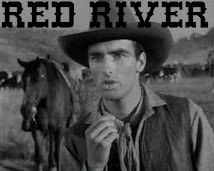
From All Movie Guide: Along with Marlon Brando, Montgomery Clift typified the emergence of a new breed of Hollywood star: Prodigiously talented, intense, and defiantly non-conformist, he refused to play by the usual rules of celebrity, actively shunning the spotlight and working solely according to his own whims and desires. A handsome and gifted actor, he channeled the pain and torment so rampant in his private life into his screen and stage roles, delivering remarkably poignant and sensitive performances which influenced generations of actors to come. Born October 17, 1920, in Omaha, NE, Clift began performing in summer stock at the age of 14 in a production of Fly Away Home. Within seven months, the play was running on Broadway, and throughout the remainder of his teen years he remained a fixture on the New York stage. Next, in 1935, was Cole Porter's Jubilee. In 1940, Clift also appeared with the Lunts in There Shall Be No Night, and in 1942 performed in The Skin of Our Teeth. His work in the Lillian Hellman smash The Searching Wind brought any number of offers from Hollywood, but he rejected them to appear in The Foxhole in the Parlor; finally, after earning acclaim for Tennessee Williams' You Touched Me, Clift agreed to make his film debut in the classic 1948 Howard Hawks Western Red River.


Full Biography

From All Movie Guide: Along with Marlon Brando, Montgomery Clift typified the emergence of a new breed of Hollywood star: Prodigiously talented, intense, and defiantly non-conformist, he refused to play by the usual rules of celebrity, actively shunning the spotlight and working solely according to his own whims and desires. A handsome and gifted actor, he channeled the pain and torment so rampant in his private life into his screen and stage roles, delivering remarkably poignant and sensitive performances which influenced generations of actors to come. Born October 17, 1920, in Omaha, NE, Clift began performing in summer stock at the age of 14 in a production of Fly Away Home. Within seven months, the play was running on Broadway, and throughout the remainder of his teen years he remained a fixture on the New York stage. Next, in 1935, was Cole Porter's Jubilee. In 1940, Clift also appeared with the Lunts in There Shall Be No Night, and in 1942 performed in The Skin of Our Teeth. His work in the Lillian Hellman smash The Searching Wind brought any number of offers from Hollywood, but he rejected them to appear in The Foxhole in the Parlor; finally, after earning acclaim for Tennessee Williams' You Touched Me, Clift agreed to make his film debut in the classic 1948 Howard Hawks Western Red River.

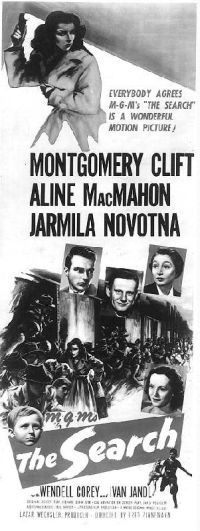
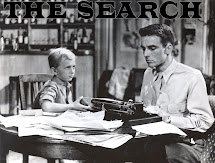
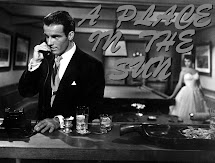
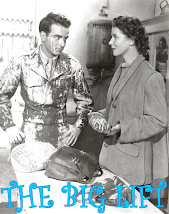
From the outset, Clift refused to play the studio game: He did not sign any long-term contracts and chose to work only on projects which intrigued him, like Red River. However, the film was so long in post-production that screen audiences instead got their first glimpse of him in Fred Zinneman's The Search, where unanimous praise for his sensitive, unsentimental, and Oscar-nominated performance made Clift among the hottest commodities in the business. He agreed to appear in three films for Paramount (only completing two): The first was William Wyler's 1949 adaptation of Henry James' The Heiress, with Billy Wilder's Sunset Boulevard scheduled to follow. At the last minute, Clift backed out of the project, however, to star in 20th Century Fox's 1950 war drama The Big Lift. Upon returning to Paramount, he starred in George Stevens' classic A Place in the Sun, earning a second Academy Award nomination for his performance opposite Elizabeth Taylor, who became his real-life confidante. Clift then disappeared from view for two years, coaxed out of self-imposed exile by Alfred Hitchcock to star in the 1953 thriller I Confess.

For Zinnemann, Clift next starred in the war epic From Here to Eternity; the film was the biggest success of his career, earning him another Best Actor bid (one of the movie's 13 total nominations; it took home eight, including Best Picture). After headlining Vittorio De Sica's Stazione Termini, Clift returned to Broadway to appear in The Seagull; in order to commit to the project, he needed to turn down any number of screen offers, including On the Waterfront and East of Eden. In total, he was away from cinema for four years, not resurfacing prior to the 1957 smash Raintree County; its success re-established him among Hollywood's most popular stars, but offscreen Clift's life was troubled. Tragedy struck when a horrific auto accident left him critically injured. He gradually recovered, but his face was left scarred and partially paralyzed. Still, Clift continued performing, delivering performances informed by even greater depth and pathos than before. His first project in the wake of the accident was 1958's The Young Lions, his first and only collaboration with Marlon Brando.

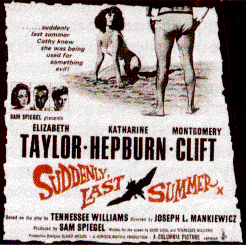
In 1959, Clift next reunited with Taylor for Suddenly, Last Summer, then starred in Elia Kazan's Wild River. In 1961, he co-starred in The Misfits (the final completed film from another Hollywood tragedy, Marilyn Monroe), then delivered a stunning cameo as a witness in the Stanley Kramer courtroom drama Judgment at Nuremburg. He then starred as Freud for director John Huston. The film was a box-office disaster, suffering a lengthy delay in production when Clift was forced to undergo surgery to remove cataracts from both eyes. He later sued Universal to recover his 200,000-dollar fee for the project; the studio countersued for close to 700,000 dollars, alleging his excessive drinking had doomed the picture's success. The matter was settled out of court, but it crippled Clift's reputation, and because of this, and his increasing health problems, he did not work for another four years until director Raoul Levy offered him the lead in the 1966 thriller Lautlose Waffen. At the insistence of star Elizabeth Taylor, he was then offered a supporting role in Reflections of a Golden Eye, but before filming began, he died of a heart attack at his New York City home on July 23, 1966. He was just 45 years old. ~ Jason Ankeny, Rovi

Education

Institution - Dalton School
Location - New York, New York
Year range - 1936
Institution - Actors Studio
Year range - 1947


Filmography


The Defector (1966)

Role: Professor James Bower

Freud (1962)

Role: Sigmund Freud

The Misfits (1961)

Role: Perce Howland

Wild River (1960)

Role: Chuck Glover

Lonelyhearts (1958)

Role: Adam White

The Young Lions (1958)

Role: Noah Ackerman

Raintree County (1957)

Role: John Wickliff Shawnessy

From Here to Eternity (1953)

Role: Robert E Lee "Prew" Prewitt

I Confess (1953)

Role: Father Michael Logan

Red River (1948)
Role: Matthew Garth


Nomination

Best Supporting Actor - 1961 Academy of Motion Picture Arts and Scie
Best Performance by an Actor in a Supporting Role in a Motion Pic - 1961 Hollywood Foreign Press Association
Best Actor - 1953 Academy of Motion Picture Arts and Scie
Best Actor - 1951 Academy of Motion Picture Arts and Scie
Best Actor - 1948 Academy of Motion Picture Arts and Scie

24.1.10

Encuentro con la prensa

Durante el rodaje de From here to eternity (De aquí a la eternidad, 1953) Monty estuvo charlando con este reportero japonés quien le enseña un ejemplar de su revista.

Meeting with Japanese entertainment reporter Masanori Komorimiya on the set.

25.7.09

Fallece de repente el actor Montgomery Clift.- noticia en Abc

El periódico español recogía así la noticia:

(pulsando en la imagen se lee el texto)

18.12.08

Sheila Graham cuenta una anécdota del rodaje de Freud (18 dic 1962)

En su columna Gadabout's Diary del The Desert News, la periodista de cotilleos Sheila Graham cuenta una anécdota del rodaje de Freud. El artículo apareció el 18 de diciembre de 1962 (tal día como hoy) tras el estreno de Freud que había sido el 6 de diciembre. Lo curioso es que Monty no pudo asistir a la premiere porque ese mismo día ingresaba en el Cedars Sinai para su delicada operación de cataratas (ver post) pero la perioditas no dice nada.

27.7.08

Funeral por Montgomery Clift.- New York Times

Ésta es la noticia original que se recogía en el periódico New York Times:


Funeral for Montgomery Clift attended by celebrities here

July 27, 1966, Wednesday
Page 39, 423 words

A simple Episcopal funeral service was held at St. James's Church at Madison Avenue and 71st Street yesterday morning for Montgomery Clift, the 45year-old screen actor who died of a heart ailment here Saturday. [End of first paragrap]


Para leer el artículo entero hay que estar abonado. Ver
web.

23.3.08

I Confess.- crítica de Bosley Crowther (23 marzo 1953)

Texto íntegro y original de la crítica que escribió Bosley Crowther del New York Times el 23 de marzo de 1953, tal día como hoy (hace 55 años).

(English text)

The Screen in Review; 'I Confess', Hitchcock Drama of Priest's Dilemma Starring Clift, Opens at Paramount.

By BOSLEY CROWTHER
Published: March 23, 1953

Alfred Hitchcock's famous talent for brewing a mood of fine suspense with clever direction and cutting is spent on a nigh suspenseless script in "I Confess," his latest picture for Warners, which opened at the Paramount on Saturday. And even though moments in the picture do have some tension and power, and the whole thing is scrupulously acted by a tightly professional cast, the consequence is an entertainment that tends to drag, sag and generally grow dull. It is not the sort of entertaiment that one hopefully expects of "Hitch."

The trouble, of course, is that the audience is told near the start of the film that the hero is not guilty of the murder with which he is subsequently charged. The murderer, we know, is a fellow who confesses his act right away to the irreproachable hero, a Roman Catholic priest. And the issue is in the dilemma of the priest, when suspicion falls on him and he is unable to clear himself in a jiffy because he is bound to silence by what is known as "the seal of the confessional."

This makes for a nervous situation that George Tabori and William Archibald have prolonged through a considerable amount of incidental plotting in their obviously padded script. They have ominously piled against their hero so much heavy circumstantial evidence that it seems he can never get around it and avoid the penalty of loyalty to a creed. But only the most credulous patron will be worried for very long that the hero will not be delivered from his dilemma by some saving grace. And this realization well unburdens the situation of any real suspense.

Meanwhile, the incidental plotting provides an excess of ponderous details having to do with a long-ago romance between the hero (before he became a priest) and a rather persistent young lady, now the wife of an eminent lawyer. The romance is blissfully innocent, and how it should ever serve as a reasonable basis for blackmail (as it is said to do), is difficult to see. In short, the plotting of the story through its long middle section is dull.

Finally, the off-beat possibility of making something of the anguish of the priest in this unhappy situation is not only missed in the script but it is barely realized and suggested in the performance of Montgomery Clift. Under Mr. Hitchcock's direction, Mr. Clift rather walks through the role with a slightly bewildered expression and a monotonously taciturn air. He seems neither tormented nor frightened—nor, for that matter, really to care.

As the matronly lady of the old romance, Anne Baxter gives an eloquent show of feeling sorry for herself and breathing heavily, but the ease with which she abandons both and resumes a dutiful attitude toward her husband (Roger Dann) is a bit disheartening. Karl Maiden as a stubborn detective, Brian Aherne as a prosecutor, O. E. Hasse as the twitching murderer and Dolly Haas as his wife are all good.

And, of course, Mr. Hitchcock does manage to inject little glints of imagery and invent little twists of construction that give the film the smooth, neat glitter of his style. Shot on location in Quebec, it has a certain atmospheric flavor, too. But it never gets up and goes places. It just ambles and drones along.

On the stage at the Paramount are Patti Page, Bobby Sargent, the Clark Brothers and Jerry Wald's band.

Ver web.

Su carrera comprende 17 títulos entre 1948 y 1966. Trabajó con los grandes directores (Hawks, Hitchcock, Stevens, Zinnemann, Kazan, Huston, Wyler) y las grandes estrellas (Lancaster, Marilyn Monroe, Katherine Hepburn, Brando, Wayne, Elizabeth Taylor especialmente) de entonces.
The Right Profile
Lyric
Say, where did I see this guy?
In red river?
Or a place in the sun?
Maybe the misfits?
Or from here to eternity?

Everybody say, is he all right?
And everybody say, whats he like?
Everybody say, he sure looks funny.
Thats...Montgomery Clift, honey!

New York, New York, New York, 42nd street
Hustlers rustle and pimps pimp the beat
Monty Clift is recognized at dawn
He aint got no shoes and his clothes are torn

I see a car smashed at night
Cut the applause and dim the light
Monty's face is broken on a wheel
Is he alive? can he still feel?

Everybody say, is he all right?
And everybody say, whats he like?
Everybody say, he sure looks funny.
Thats...Montgomery Clift, honey!

Nembutol numbs it all
But I prefer alcohol

He said go out and get me my old movie stills
Go out and get me another roll of pills
There I go again shaking, but I aint got the chills